
Penicillin Allergy Cross Reactivity


Clinical Content
6 min read
October 6, 2023

Penicillin Allergy Cross Reactivity

J

Jimmy

PharmD

Introduction

  1. Only 0.5% to 2% of patients with a documented penicillin allergy that are administered a penicillin will exhibit a hypersensitivity reaction, usually presenting as a rash or hives.
  2. True IgE-mediated penicillin allergies that cause anaphylaxis are rare.
  3. An IgE-mediated penicillin allergy can diminish over time, as 80% of patients become tolerant after a decade.
  4. Patients with a documented penicillin allergy may be inappropriately exposed to alternative antibiotics, resulting in increased treatment failures, adverse effects, and antimicrobial resistance.
  5. Penicillins, cephalosporins, and carbapenems all share a beta-lactam core structure, thus raising the potential for cross-reactivity among these agents.

Pharmacology
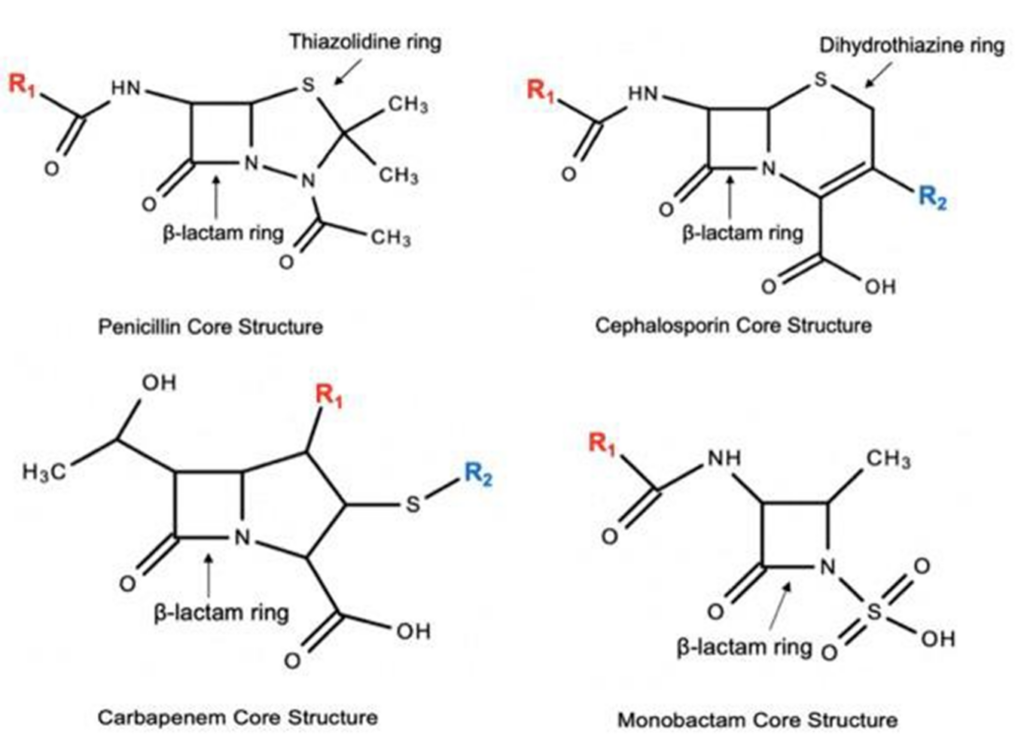
  • The following drugs in each group may have cross-reactivity to each other due to similar side chains
  • Cross-reactivity between penicillins and cephalosporins is about 2%
  • Cefazolin is NOT likely to cross react with penicillin (side chains NOT similar)
  • Cross-reactivity with monobactams (i.e. aztreonam) is negligible
  • Cross-reactivity between penicillins and carbapenems is <1%
Group 1 Group 2 Group 3 Group 4
Penicillin
Cefoxitin
Cefuroxime
Amoxicillin
Ampicillin
Cefaclor
Cephalexin
Cefadroxil
Ceftriaxone
Cefotaxime
Cefuroxime
Cefepime
Cefpodoxime Ceftaroline
Aztreonam
Ceftolazane Ceftazidime

Overview of Evidence

Author Design Intervention & Comparison Outcome
Why Cross-Reactivity?
Nagakura, 1990   Mayorga, 1995     Animal study -Studied antibodies formed when animals were immunized with protein-beta-lactam conjugates -92% of the antibodies recognized an epitope in which the side chain was the main constituent -The side chain is the most important determinant in penicillin immunogenicity
Cephalosporins
Goodman, 2001 Retrospective review (n=2933) -Orthopedic patients with penicillin allergy receiving cefazolin prior to a procedure Only 1 patient may have had an allergic reaction to cefazolinCross-reactivity rate with cefazolin was 0.33%
  Daulat, 2004   Retrospective review (n=606) -Patients with penicillin allergy receiving cephalosporins -42% 1st gen., 21% 2nd gen., and 37% 3rd or 4th gen. cephalosporins Only 1 patient had an allergic reaction that was documented as worsening of underlying eczema after being placed on cefazolinCross-reactivity was 0.17%
    Apter, 2006     Retrospective review (n=3920) -Patients with a prescription for penicillin followed by a prescription for a cephalosporin -Identified allergic-like events within 30 days after each prescription Only 43 patients who experienced an allergic- like reaction after both penicillin and cephalosporinCross-reactivity rate was 1.1%70% of these patients just had urticariaThe risk of anaphylaxis to cephalosporins was only 0.001%
Romano, 2018 Prospective review (n=252) Prospective study of 252 subjects with IgE-mediated hypersensitivity to penicillins – Serum specific IgE assays for cefaclor and skin tests for 10 cephalosporins   -Oral challenges with cefuroxime axetil, ceftriaxone, cefaclor, and cefadroxil for subjects with negative skin tests 99 subjects (39.3%) had positive allergy tests for cephalosporins 95 subjects (37.7%) were positive to aminocephalosporins and/or cefamandole, which share side chains with penicillins All 244 subjects who underwent challenges with cefuroxime axetil and ceftriaxone tolerated them 7 subjects reacted to cefaclor or cefadroxil
Carbapenems
    Romano, 2006   Prospective study (n=112) -Skin tested to penicillins and then skin tested to imipenem -If skin test to imipenem was negative, then challenged with IM dose Only 1 patient of the penicillin skin-test positive patients had a positive skin test to imipenemCross-reactivity rate was 0.9%None of the 110 patients with a negative imipenem skin test that underwent IM challenge had a reaction
  Romano, 2007   Prospective study (n=104)         -Skin tested to penicillins and then skin tested to meropenem -If skin test to imipenem was negative, then challenged with IV dose Only 1 patient of the penicillin skin-test positive patients had a positive skin test to meropenemCross-reactivity rate was 1%All 103 patients with a negative meropenem skin test tolerated the IV challenge
  Atanaskovic- Markovic, 2008   Prospective study (n=108) -Children with penicillin allergy were skin tested to penicillin and meropenem -If skin test to meropenem was negative, then challenged with IV dose Only 1 patient with a positive penicillin test reacted to the meropenem skin testCross-reactivity rate was 0.9%All 107 patients with a negative meropenem skin test tolerated the IV challenge
Sánchez de Vicente, 2020 Prospective study (n=137)   Tolerance testing for cephalosporins and carbapenems in patients with confirmed penicillin allergy 0/46 patients showed positive skin tests for imipenem. 0.79% (1/137) patients showed a positive skin test for cefuroxime.0.79% (1/137) patients showed a positive skin test for  ceftriaxone.

Conclusions

  1. True penicillin allergies are less common than reported, and anaphylaxis is uncommon.
  2. Cross-reactivity among penicillins and cephalosporins is attributed to similarity in side chains.
  3. Cephalosporin cross-reactivity with penicillins is much lower than reported in early studies partly due to contamination of study drugs with penicillin.
  4. Cross-reactivity between cephalosporins is about 2% and with carbapenems is <1%

References

  1. Apter AJ, Kinman JL, Bilker WB, et al. Is There Cross-Reactivity Between Penicillins and Cephalosporins? Am J Med. 2006;119(4):354e11-19.
  2. Atanaskovic-Markovic M, Gaeta F, Medjo B, Viola M, Nestorovic B, Romano A. Tolerability of Meropenem in Children with IgE-Mediated Hypersensitivity to Penicillins. Allergy. 2008;63:237-240.
  3. Blumenthal KG, Shenoy ES, Wolfson AR, et al. Addressing Inpatient Beta-Lactam Allergies: A Multihospital Implementation. J Allergy Clin Immunol Pract. 2017;5(3):616-625.
  4. Blumenthal KG, Huebner EM, Fu X, et al. Risk-Based Pathway for Outpatient Penicillin Allergy Evaluations. J Allergy Clin Immunol Pract. 2019;7(7):2411-2414.
  5. Campagna JD, Bond MC, Schabelman E, Hayes BD. The Use of Cephalosporins in Penicillin-Allergic Patients: A Literature Review. J Emerg Med. 2012;42(5):612-620.
  6. Chaudry SB, Veve MP, Wagner JL. Cephalosporins: A Focus on Side Chains and Beta-Lactam Cross-Reactivity. Pharmacy. 2019;7:1-16.
  7. Daulat S, Solensky R, Earl HS, Casey W, Gruchalla RS. Safety of Cephalosporin Administration to Patients with Hstories of Penicillin Allergy. J Allergy Clin Immunol Pract. 2004;113(6):1220-1222.
  8. DePestel DD, Benninger MS, Danziger L, et al. Cephalosporin Use in Treatment of Patients with Penicillin Allergies. J Am Pharm Assoc. 2008;48:530-540.
  9. Goodman EJ, Morgan MJ, Johnson PA, Nichols BA, Denk N, Gold BB. Cephalosporins can be Given to Penicillin-Allergic Patients Who Do Not Exhibit an Anaphylactic Response. J Clin Anesth. 2001;13(8):561-564.
  10. Mayorga C, Obispo T, Jimeno L, et al. Epitope Mapping of Beta-Lactam Antibiotics with the Use of Monoclonal Antibodies. Toxicology. 1995;97:225-234.
  11. Nagakura N, Souma S, Shimizu T, Yanagihara Y. Anti-Ampicillin Monoclonal Antibodies and their Cross- Reactivities to Various Beta-Lactams. Br J Hosp Med. 1990;44:252-258.
  12. Romano A, Viola M, Gueant-Rodriguez RM, Gaeta F, Pettinato R, Gueant JL. Imipenem in Patients with Immediate Hypersensitivity to Penicillins. N Engl J Med. 2006;354:2835-2837.
  13. Romano A, Viola M, Gueant-Rodriguez RM, Gaeta F, Valluzzi R, Gueant JL. Brief Communication: Tolerability of Meropenem in Patients with IgE-Mediated Hypersensitivity to Penicillins. Ann Intern Med. 2007;146:266-269.
  14. Shenoy ES, Macy E, Rowe T, Blumenthal KG. Evaluation and Management of Penicillin Allergy: A Review. JAMA. 2019;321(2):188-199.
  15. Sánchez de Vicente J, Gamboa P, García-Lirio E, Irazabal B, Jáuregui I, Martínez MD, Segurola A, Seras Y, Galán C. Tolerance to Cephalosporins and Carbapenems in Penicillin-Allergic Patients. J Investig Allergol Clin Immunol. 2020;30(1):75-76. doi: 10.18176/jiaci.0463. Epub 2019 Nov 4. PMID: 31680067.
  16. Romano A, Valluzzi RL, Caruso C, Maggioletti M, Quaratino D, Gaeta F. Cross-Reactivity and Tolerability of Cephalosporins in Patients with IgE-Mediated Hypersensitivity to Penicillins. J Allergy Clin Immunol Pract. 2018 Sep-Oct;6(5):1662-1672. doi: 10.1016/j.jaip.2018.01.020. Epub 2018 Feb 3. PMID: 29408440.

Level Up Your Practice

Ready to advance your pharmacy career?

Join thousands of pharmacy professionals learning with PACU.
Start Free Trial

Corticosteroids in Sepsis by Marissa Marks, PharmD


Clinical Content
7 min read
September 14, 2023

Corticosteroids in Sepsis by Marissa Marks, PharmD

J

Jimmy

PharmD

Introduction

  1. Sepsis is a systemic inflammatory response (SIRS) with associated organ dysfunction as a result of an infection.
  2. Sepsis is defined as ≥2 of the criteria:
    1. Temperature >38 ºC or <36 ºC
    1. Heart rate of >90 bpm
    1. Respiratory rate of >20 breaths/minute or pCO2 of <32 mmHg
    1. WBC >12,000 cells/mL or <4000 cells/mL
  3. Initial management of sepsis includes:
    1.  Intravenous fluids (LR/NS) 30 mL/kg (based on total body weight) administered within the first 3 hours.
    1. Empiric antibiotic therapy based on the common bacteria and site of infection initiated within the first hour.
  4. Per the Surviving Sepsis guidelines, IV hydrocortisone is recommended for patients at least 4 hours after initiation of norepinephrine/epinephrine ≥0.25 mcg/kg/min to maintain a MAP of ≥65 mmHg.

Pharmacology

  Hydrocortisone Methylprednisolone Fludrocortisone
Dose IV: 50 mg Q6H or 100 mg Q8H x 5-7 days IV (succinate): 40 to 125 mg/day (maximum of 1 to 2 mg/kg/day) PO (in addition to another glucocorticoid): 0.05 mg/day x 7 days
Administration IV: over ≥30 seconds IV: over several minutes or over 15 to 60 minutes as an infusion Administer by NG tube
PK/PD -Onset of action (IV): 1 hour -T ½ elimination (IV): 2 +/- 0.3 hours -Onset of action (IV): 1 hour -T ½ elimination (IV): 0.25 +/- 0.1 hour -Onset of action (PO): 1-2 hours -T ½ elimination (PO): ~3.5 hours
Mechanism of Action -Anti-inflammatory (decreased synthesis and release of inflammatory mediators) -Immunosuppressive (decreased response to hypersensitivity reactions) -Antiproliferative: vasoconstriction and decreased permeability of WBC to the injury  -Same mechanism of action as hydrocortisone with a 4-5x greater potency    – Mineralocorticoid activity > hydrocortisone or methylprednisolone
Adverse Effects -Cardiovascular: increased blood pressure -Endocrine: fluid retention, hyperglycemia, weight gain -Gastrointestinal: increased appetite -Psychiatric: altered behavior  -Similar adverse effects as hydrocortisone -Higher risk of fluid retention, hypertension, and decreased electrolyte concentrations
Drug Interactions and warnings Warnings: adrenal suppression, immunosuppression (higher doses for increased duration of therapy), psychiatric changes -Drug Interactions: antacids (separate by 2 hours), live vaccinations, DDAVP (risk of hyponatremia), succinylcholine -Warnings: adrenal suppression, acute hepatitis (rare) -Drug Interactions: similar to hydrocortisone and fludrocortisone -Warnings: patients with underlying hepatic dysfunction, myasthenia gravis, systemic sclerosis, or thyroid disease -Drug Interactions: similar to hydrocortisone and methylprednisolone
Compatibility Drug in Solution: None tested   Drug in Solution:    -Compatible: D5W- ½ NS, NS    -Incompatible: D5W, D5NS, LR N/A

Overview of Evidence

Author, year Design/ sample size Intervention & Comparison Outcome
French Trial Annane D, 2002.   RCT (n = 300)   hydrocortisone (50-mg intravenous bolus every 6 hours) and fludrocortisone (50- micro g tablet once daily) (n = 151) or matching placebos (n = 149) for 7 days. 7-day treatment with low doses of hydrocortisone and fludrocortisone significantly reduced the risk of death in patients with septic shock and relative adrenal insufficiency without increasing adverse events.
Teng-Jen Yu, 2009. RCT (n = 40) Hydrocortisone 50 mg IV Q6H or methylprednisolone 20 mg Q12H x 7 days -Higher survival rates with hydrocortisone vs methylprednisolone
VANISH Gordan, 2016 RCT (n = 1400)   Vasopressin vs. norepinephrine plus hydrocortisone vs. placebo No significant difference in mortality at 28 days, but vasopressin plus hydrocortisone was associated with faster reversal of shock and reduced need for renal replacement therapy
Gibbison B, 2017. Systematic review & meta-analysis (n = 33 clinical trials) Systemic treatment with any corticosteroids -Decreased septic shock reversal with methylprednisolone vs hydrocortisone   -Increased 28-day mortality with methylprednisolone vs dexamethasone -Decreased risk of superinfections with methylprednisolone Decreased ICU mortality and LOS with methylprednisolone
CORTICUS
Sprung, 2018
RCT, (n=499)   Hydrocortisone 50  mg every 6 hours vs. placebo   The study found no significant difference between the two groups in 28-day mortality, but hydrocortisone was associated with a higher rate of shock reversal and a lower rate of progression to multiple organ dysfunction syndrome.  
HYPRESS Key, 2018 RCT (n = 380)   Infusion of hydrocortisone 200 mg daily for five days followed by tapering until day 11  vs placebo The study found no significant difference between the two groups in the primary outcome of time alive and free of vasopressor support by day 7   The study also found no significant difference between the two groups in secondary outcomes such as mortality at 28 days, ICU-free days, and hospital-free days
ADRENAL Venkatesh B, 2018. RCT (n = 3800) Hydrocortisone 200 mg IV daily -No difference in 28 or 90-day mortality with hydrocortisone –Decreased time to resolution of septic shock and discharge from the ICU with hydrocortisone -Decreased number of patients received a blood transfusion with hydrocortisone -Higher number of adverse events with hydrocortisone
APROCCHHSAnnane D, 2018. RCT (n = 1280) -Hydrocortisone 50 mg IV Q6H + fludrocortisone 50 mcg PO daily in AM x 7 days -Drotrecogin alfa -Combination therapy of the three medications  Decreased 90-day mortality with hydrocortisone + fludrocortisone -Decreased mortality with hydrocortisone + fludrocortisone at ICU and hospital discharge -Decreased time to discontinue vasopressor therapy and mechanical ventilation and achieve a SOFA score of <6 with hydrocortisone + fludrocortisone  

Conclusions

  • Per the Surviving Sepsis guidelines, hydrocortisone is recommended first-line for the treatment of septic shock in patients that are refractory to fluid (volume) resuscitation.
  • Hydrocortisone portrayed greater efficacy in clinical trials than methylprednisolone.
  • There are no clinical trials for the comparison of hydrocortisone monotherapy versus hydrocortisone + fludrocortisone; however, it is hypothesized that hydrocortisone provides sufficient mineralocorticoid activity as monotherapy without the increased risks of adverse effects with the addition of fludrocortisone.
    • Necessary to avoid fludrocortisone in specific patient populations (i.e. congestive heart failure, hepatic and renal disease, etc.)

References

  1. Annane D, Buisson CB, Cariou A, Martin C, Misset B, Renault A, Lehmann B, Millul V, Maxime V, Bellissant E; APROCCHSS Investigators for the TRIGGERSEP Network. Design and conduct of the activated protein C and corticosteroids for human septic shock (APROCCHSS) trial. Ann Intensive Care. 2016 Dec;6(1):43.
  2. Annane D, Renault A, Brun-Buisson C, Megarbane B, Quenot JP, Siami S, Cariou A, Forceville X, Schwebel C, Martin C, Timsit JF, Misset B, Ali Benali M, Colin G, Souweine B, Asehnoune K, Mercier E, Chimot L, Charpentier C, François B, Boulain T, Petitpas F, Constantin JM, Dhonneur G, Baudin F, Combes A, Bohé J, Loriferne JF, Amathieu R, Cook F, Slama M, Leroy O, Capellier G, Dargent A, Hissem T, Maxime V, Bellissant E; CRICS-TRIGGERSEP Network. Hydrocortisone plus Fludrocortisone for Adults with Septic Shock. N Engl J Med. 2018 Mar 1;378(9):809-818.
  3. Evans L, Rhodes A, Alhazzani W, et al. Surviving sepsis campaign: international guidelines for management of sepsis and septic shock 2021. Intensive Care Med. 2021 Nov;47(11):1181-1247.
  4. Gibbison B, López-López JA, Higgins JP, Miller T, Angelini GD, Lightman SL, Annane D. Corticosteroids in septic shock: a systematic review and network meta-analysis. Crit Care. 2017 Mar 28;21(1):78.
  5. Hotchkiss RS, Moldawer LL, Opal SM, Reinhart K, Turnbull IR, Vincent JL. Sepsis and septic shock. Nat Rev Dis Primers. 2016 Jun 30;2:16045.
  6. Hydrocortisone (2023) UpToDate. Available at: https://www.uptodate.com (Accessed: 13 August 2023).
  7. Hydrocortisone Sodium Succinate (2023) Micromedex. Available at: https://www.micromedexsolutions.com (Accessed: 13 August 2023).
  8. Venkatesh B, Finfer S, Cohen J, Rajbhandari D, Arabi Y, Bellomo R, Billot L, Correa M, Glass P, Harward M, Joyce C, Li Q, McArthur C, Perner A, Rhodes A, Thompson K, Webb S, Myburgh J; ADRENAL Trial Investigators and the Australian–New Zealand Intensive Care Society Clinical Trials Group. Adjunctive Glucocorticoid Therapy in Patients with Septic Shock. N Engl J Med. 2018 Mar 1;378(9):797-808.
  9.  Yu TJ, Liu YC, Yu CC, Tseng JC, Hua CC, Wu HP. Comparing hydrocortisone and methylprednisolone in patients with septic shock. Adv Ther. 2009 Jul;26(7):728-35.
  10. Keh D, Trips E, Marx G, Wirtz SP, Abduljawwad E, Bercker S, Bogatsch H, Briegel J, Engel C, Gerlach H, Goldmann A, Kuhn SO, Hüter L, Meier-Hellmann A, Nierhaus A, Kluge S, Lehmke J, Loeffler M, Oppert M, Resener K, Schädler D, Schuerholz T, Simon P, Weiler N, Weyland A, Reinhart K, Brunkhorst FM; SepNet–Critical Care Trials Group. Effect of Hydrocortisone on Development of Shock Among Patients With Severe Sepsis: The HYPRESS Randomized Clinical Trial. JAMA. 2016 Nov 1;316(17):1775-1785. doi: 10.1001/jama.2016.14799. PMID: 27695824.
  11. Sprung CL, Annane D, Keh D, Moreno R, Singer M, Freivogel K, Weiss YG, Benbenishty J, Kalenka A, Forst H, Laterre PF, Reinhart K, Cuthbertson BH, Payen D, Briegel J; CORTICUS Study Group. Hydrocortisone therapy for patients with septic shock. N Engl J Med. 2008 Jan 10;358(2):111-24. doi: 10.1056/NEJMoa071366. PMID: 18184957.
  12. Gordon AC, Mason AJ, Thirunavukkarasu N, Perkins GD, Cecconi M, Cepkova M, Pogson DG, Aya HD, Anjum A, Frazier GJ, Santhakumaran S, Ashby D, Brett SJ; VANISH Investigators. Effect of Early Vasopressin vs Norepinephrine on Kidney Failure in Patients With Septic Shock: The VANISH Randomized Clinical Trial. JAMA. 2016 Aug 2;316(5):509-18. doi: 10.1001/jama.2016.10485. PMID: 27483065.

Level Up Your Practice

Ready to advance your pharmacy career?

Join thousands of pharmacy professionals learning with PACU.
Start Free Trial

Etomidate for RSI: Seizure Considerations


Clinical Content
5 min read
May 5, 2023

Etomidate for RSI: Seizure Considerations

J

Jimmy

PharmD


Clinical Content
4 min read
May 5, 2023

Etomidate for RSI: Seizure Considerations

J

Jimmy

PharmD

Introduction

  1. Rapid sequence intubation (RSI) is a process whereby an induction agent and a neuromuscular blocking agent are given in rapid succession to facilitate endotracheal intubation
  2. The selection of a specific sedative depends on multiple factors: the clinical scenario, which includes patient factors (includes cardiorespiratory and neurologic status, allergies, comorbidity) and the clinician’s experience/training and institutional factors, as well as the characteristics of the sedative
  3. Etomidate remains the most commonly used induction agent; however, it is not without its own pharmacologic considerations such the decrease in seizure threshold.

Pharmacology

Dose 0.3 mg/kg IV  
Administration IV push
Formulation* 20 mg/ 10 ml 40 mg/ 20ml 
PK/PD Onset: ~20 seconds  
Duration: 4-10 minutes  
Metabolism: Hydrolysis of the ethylester side  
Renal Excretion: 75%
Adverse Effects Injection site pain, nausea, vomiting, myoclonus
Drug Interactions  No major reactions
Compatibility Incompatible with vitamin c and vecuronium
Comments There is hypothetical concerns about adrenal insufficiency with a single dose. Hemodynamically neutral
*Various formulations may appear, check you institution formulary

Drug Hemodynamic Effect Comments
Etomidate ↔ BP, ↔ CO, ↔ HR,  ↓ cortisol , ↔ ICP Prolonged inhibition of steroid synthesis in the critically ill; withdrawn from number of countries
Ketamine ↑BP, ↑ HR, ↑ CO, ↔ cortisol, ↑↓ ICP ↔  or ↑ CPP and ↔ ICP with standard anesthetic management
Propofol ↓ BP, ↔ HR,↓ CO, ↔ cortisol, ↓ ICP Hemodynamic compromise marked in elderly, ASA 3 or more or hypovolemic patients with ‘standard’ induction dose

Overview of Evidence

Author, year  Design/ sample size Intervention & Comparison Outcome
Perier et al,2018 Retrospective N=97 Etomidate vs sodium thiopental for RSI in patients with convulsive status epilepticus •       Seizure and/or status epilepticus recurred in 13 (56%) patients in the etomidate group and 11 patients (44%) in the sodium thiopental group
Gabor,2006 Retrospective N=30 1 mg/kg of propofol or 0.2 mg/kg of etomidate for electroconvulsive therapy •       After etomidate induction, seizure durations registered either by EEG or by EMG were longer than propofol treated cases.
Zuckerbraun et al, 2006 Retrospective N=101 Etomidate for RSI in general population •       There was no relationship between seizures after etomidate administration and prior seizure history (p = 0.25).
Guldner,2003 Retrospective N=105 Etomidate for RSI in general population •       Complications included three patients who vomited within 10 minutes of etomidate administration. There were no cases of documented myoclonus, status epilepticus, or new-onset seizures.
Reddy,1993 Prospective randomized study N=68 Etomidate, thiopental, methohexital or propofol for anesthesia induction Spontanous movement (myoclonic, dystonic or tremor): Etomidate 86%, thiopental 16.6%, methohexital 12.5%, propofol 5.5% EEG activity: 2 patients receiving etomidate, no generalized epileptiform activity noted
Ebrahim,  1986 Case reports N=12 etomidate for anesthesia induction in patient with intractable seizures Electroencephalograms were recorded by means of subdural electrodes.  Nine of the 12 patients showed an increase in epileptiform activity.  In six of the nine patients, the activity was marked.
Krieger,1985 Letter to editor N=55 Etomidate for anesthesia induction or to activate seizure focus 25 patients had epilptiform activity associated with etomidate administration 6/30 patients had generalized epileptiform activity noted on EEG
Grant,1983 Case series N=4 Etomidate infusion for sedation in ICU Generalized and focal seizures after variable periods of etomidate o          EEGs were not evaluated at the time of suspected seizure activity. Patients were on infusion for 6-28 hours at onset of seizure activity.
Ghonrim,1977 Prospective randomized study N=120 Etomidate or thiopental for anesthesia induction 28% etomidate vs. 0% thiopental had myoclonic movements 11% etomidate vs. 1% thiopental had tonic movements No epileptiform discharges were noted in 10 patients who had EEG monitoring

Conclusion

  • Etomidate is a commonly used induction agent for RSI in emergency settings. Etomidate has been shown to elicit myoclonus in a significant number of patients. However, whether myoclonus is associated with EEG confirmed epileptiform activities remains uncertain. To make matters worse, depending on the origin and type of seizure, it may be challenging for EEG to differentiate between non-seizure and seizure activity during myoclonic events.
  • Due to the low level of evidence, the patients with a history of seizures should have the risk versus benefit assessment to determine the best induction agent.

References

  1. Micromedex [Electronic version].Greenwood Village, CO: Truven Health Analytics. Retrieved September 6, 2021, from http://www.micromedexsolutions.com/
  2. Perier F. Seizure. 2018 Oct;61:170-176. PMID: 30176574.
  3. Zuckerbraun NS. Acad Emerg Med. 2006 Jun;13(6):602-9. PMID: 16636355.
  4. Grant IS, et al. Epileptiform seizures during prolonged etomidate sedation. Lancet 1983; 322(8348):511-2.
  5. Guldner G, et al.. Acad Emerg Med 2003; 10:134—139.
  6. Reddy RV, et al.. Anesth Analg 1993; 77:1008-11.
  7. Ebrahim ZY, et al. . Anesth Analg 1986; 65:1004-6.
  8. Krieger W, et al K. Seizures with etomidate anesthesia [letter]. Anesthesiol Analg. 1985; 64:1226–7.
  9. Ghoneim MM, Anesth Analg 1977; 56:479-85.
  10. Gabor G. Neuropsychopharmacol Hung 2007; 9(3):125-30.

Level Up Your Practice

Ready to advance your pharmacy career?

Join thousands of pharmacy professionals learning with PACU.
Start Free Trial

Level Up Your Practice

Ready to advance your pharmacy career?

Join thousands of pharmacy professionals learning with PACU.
Start Free Trial

Ketamine for Treatment of Acute Agitation


Clinical Content
3 min read
April 28, 2023

Ketamine for Treatment of Acute Agitation

J

Jimmy

PharmD

Introduction

  1. Ketamine is a sedative used for patients with extreme/refractory undifferentiated agitation
  2. Indications for utilizing ketamine for emergent sedation of agitated patients include
    • Patient poses and immediate threat to patient and healthcare provider safety (RASS +4)
    • Failure and/or futility of alternative non-pharmacologic de-escalation strategies
    • Absence of IV access
    • Not a candidate for intramuscular antipsychotics and/or benzodiazepines due to onset of action 

Pharmacology

Properties Rapid acting general anesthetic producing cataleptic-like state due to antagonism of N-methyl-Daspartate (NMDA) receptors in the central nervous system.         
•      Ketamine also has significant analgesic/dissociative properties at lower doses 
Dose 2-5 mg/kg IM to a max single dose of 500mg
1-2 mg/kg IV  
Administration IM: Inject deep IM into large muscle (glute or vastus lateralis muscle)
IV: Administer over at least 60 seconds
Formulation 10 mg/mL, 50 mg/mL, 100 mg/mL 
*must use 100 mg/mL for IM administration to reduce volume   
PK/PD (for amnestic effects) Onset: 3-5 mins IM;   <1 minutes IV
Duration: 15-25 mins IM;  5-10 minutes IV
Bioavailability: 93% IM
Metabolism: Extensively through hematic N-demethylation
Elimination: Greater than 90% urine, <5% feces 
Adverse Effects Hypertension
Tachycardia
Hypersalivation
Nausea and vomiting 
Laryngospasm
Emergence phenomenon during  recovery phase
Increased muscle function  (hyperactivity, twitching, rigidity) 
Contraindications         •      Significant hypertension may be hazardous, ACS, ADHF, and unstable dysrhythmia
Warnings and Considerations Rapid IV administration may increase risk of respiratory depression/apnea
Verify concentration of formulation
Caution in diagnosed schizophrenia 
Hypotension in catecholamine depleted states
Pregnancy and lactation (crosses placenta)

Overview of Evidence

Author, year Design (sample size) Intervention & Comparison Outcome
Lin et al., 2020 Prospective, randomized, pilot (n=93) Ketamine 4 mg/kg IM or 1 mg/kg IV   Haloperidol 5-10 mg IM/IV +  lorazepam 1-2 mg IM/IV Ketamine achieved greater sedation within 5 and 15 minutes (22% vs 0% at 5 mins; 66% vs 7% at 15 mins)
Mankowitz et al., 2018 Systematic review (n=650) Ketamine IV or IM Mean time to sedation was 7.21min and effective in 68.5% of patients 30.5% of patients required intubation, but not all secondary to ketamine administration
Cole et al., 2016 Prehospital prospective, observational (n=146)   Haloperidol 10 mg IM   Ketamine 5 mg/kg IM Median time to adequate sedation was faster with ketamine (5 min) vs haloperidol (17 min) • Intubation rates were higher with ketamine (39%) than haloperidol (4%), as well as more complications (49% vs 5%, respectively) 38% hypersalivation in ketamine group
Isbister et al., 2016 Subgroup analysis from DORM II study; prospective, observational  (n=49) Ketamine as rescue treatment after Droperidol alone   Droperidol + DZP or MDZ   Midazolam alone Median time to sedation post-ketamine was 20 minutes (IQR 10-30) 3 patients had adverse reactions after ketamine (vomiting n=2; desaturation n=1)
Riddell  et al., 2016 Prospective, observational  (n=106) Ketamine   Lorazepam, midazolam, haloperidol, or benzodiazepine + haloperidol  Ketamine resulted in a greater number of patients with no agitation at 5 minutes than other medications
Scheppke  et al., 2014 Retrospective chart review (n=52) Ketamine ~4mg/kg IM   *Recommended midazolam 2-2.5 mg IM or IV following ketamine for emergence reaction 96% of patients obtained sedation, mean time to sedation was 2 minutes 3 patients experienced significant respiratory depression About ½ of patients received midazolam

Trials in Progress

Barbic et al., Completed March 2020, results pending Parallel, prospective, randomized, controlled Ketamine 5mg/kg IM   Midazolam 5mg IM + haloperidol 5mg IM Primary: Time to adequate sedation  Secondary: safety and tolerability, requirement of rescue medication
DZP= Diazepam; MDZ= Midazolam

Conclusions

  1. Ketamine has been shown to be effective with a quick time to sedation but is not without risks, including respiratory depression
  2. Used ketamine with caution in patients who have an underlying psychiatric disorder 
  3. Ketamine should be reserved for specific patient populations and as last line for patient/provider safety

References

  1. Ketamine. Micromedex [Electronic version].              
  2. Barbic D, et al. Trials. 2018;19(1):651. Published 2018 Nov 26.
  3. Lin M, et al. Am J Emerg Med. 2020. https://doi.org/10.1016/doi:10.1186/s13063-018-2992-x j.ajem.2020.04.013.
  4. Mankowitz WL, et al. J Emerg Med. 2018;55(5):670-81.
  5. Cole JB, et al. Clin Toxicol (Phila). 2016;54(7):556–562.
  6. Isbister GK, et al. Ann Emerg Med. 2016;67(5):581–587.
  7. Riddell J, et al. Am J Emerg Med. 2017. http://dx.doi.org/10.1016/j.ajem.2017.02.026
  8. Scheppke KA, et al. WestJEM. 2014;15(7);736-41.

Level Up Your Practice

Ready to advance your pharmacy career?

Join thousands of pharmacy professionals learning with PACU.
Start Free Trial

PPIs for the Management of Upper GI Bleed


Clinical Content
7 min read
April 21, 2023

PPIs for the Management of Upper GI Bleed

J

Jimmy

PharmD

Introduction

  1. Upper GI bleed (UGIB) is a common reason for ED visits with a major cause of morbidity, mortality and medical care costs.
  2. Peptic ulcer accounts for at least 50% of UGIB cases.
  3. Patients with UGIB usually present with hematemesis, melena and/or hematochezia.
  4. Upon presentation, hemodynamic status should be evaluated and resuscitation provided if necessary. Resuscitation can include blood transfusion for target hemoglobin of ≥7 g/dl.
  5. Patients can be risk stratified to low or high-risk using the Rockall score (range 0-7) and Blatchford score (range 0-23).
  6. Proton pump inhibitors (PPIs) remain one of the mainstays of pharmacological therapy for the management of UGIB. It can be initiated if endoscopy cannot be performed, will be delayed for >24 after presentation or following endoscopy.

  Pantoprazole Esomeprazole Omeprazole
Dose Initial Infusion: 80mg bolus then 8mg/hr continuous infusion for a total of 72hours Intermittent: 80mg LD then 40mg IVP Q12H   Maintenance High-risk: 40mg PO BID for 14days, then 40mg PO once daily  Low-risk: 20mg PO once daily   *Duration ranges from 4-12weeks  Initial Infusion: 80mg bolus then 8mg/hr continuous infusion for a total of 72hours Intermittent: 80mg LD then 40mg IVP Q12H   Maintenance High-risk: 40mg PO BID for 14days, then 40mg PO once daily  Low-risk: 20mg PO once daily   *Duration ranges from 4-12weeks Initial IV Omeprazole not available in the U.S, give IV Pantoprazole or Esomeprazole   Maintenance High-risk: 40mg PO BID for 14days, then 40mg PO once daily Low-risk: 20mg PO once daily   *Duration ranges from 4-12weeks
Administration IVP: Give over at least 2 minutes   Continuous Infusion: 8mg/hr   PO: Swallow whole without crushing or splitting 30-60minutes before food IVP: Give over at least 3 minutes for dose <80 mg; Loading dose over 30 minutes   Continuous Infusion: 8mg/hr   PO: Capsule can be given orally or opened and mixed with 50mL water for NG administration PO: Swallow whole without crushing or splitting 30-60minutes before food
PK/PD Onset: IV 15 to 30 minutes, PO 2.5hrs Absorption: Rapid, well absorbed Duration: 24hours (IV and PO)  Distribution: 98% albumin bound Half-life elimination: 1hr, 3.5-10hrs in CYP2C19 deficiency Excretion: Urine (71%), feces (18%) Distribution: 97% protein bound Metabolism: Hepatic primarily via CYP2C19 Half-life elimination: 1 to 1.5hrs in adults Excretion: Urine (80%), 20% feces Onset: PO 1hr Absorption: Rapid Duration: Up to 72hours  Distribution: 95% albumin bound Half-life elimination: 30min – 1hr, 3 hrs in hepatic impairment Excretion: Urine (77%)
Adverse Effects Headache, nausea, abdominal pain, diarrhea, vomiting Headache, flatulence, nausea, dyspepsia, abdominal pain, diarrhea Headache, abdominal pain, nausea, diarrhea, vomiting, flatulence 
Drug Interactions & Warnings Contraindicated with Atazanavir,  Rilpivirine and their combinations Contraindicated with Atazanavir,  Rilpivirine and their combinations, CYP2C19 Inducers Contraindicated with Atazanavir, Rilpivirine and their combinations, CYP2C19 Inducers
Compatibility Compatible with D5W, NS or LR Compatible with D5W, NS or LR Not Applicable
Comments: PPIs may increase the risk of Clostridium difficile associated diarrhea – use lowest dose and shortest duration where possible 

Overview of Evidence

Author, year Design &  Sample Size Intervention &  Comparison Outcomes
Daneshmend et al., 1992 Double-blind, placebo- controlled, parallel study (n=1147) Omeprazole 80mg IV bolus followed by 40mg IV every 8hr x3, then 40mg PO twice daily vs placebo Treatment started within 12h of admission, continued for 4 days or until surgery, discharge or death No significant differences between placebo and omeprazole for blood transfusions (53% v 52%), rebleeding (18% v 15%), surgery (11% v 11%) and death (5.3% v 6.9%) Significant reduction in signs of UGIB observed during endoscopy with omeprazole (33%) vs placebo (45%); p < 0.0001
Andriulli et al., 2008 Randomized, multicenter double-blind study (n=474) PPI Continuous (80mg bolus followed by 8mg/hr infusion for 72hr) PPI Intermittent (40mg IV bolus daily for 72hr) Switched to oral PPI (20 mg twice daily) after 72hr and continued until discharge Used Pantoprazole and Omeprazole Bleeding recurred in 11.8% continuous regimen vs 8.1% in the intermittent regimen; P = 0.18 7.6% vs 8.1% rebleeding during first 72hr in the continuous vs intermittent group; P = 0.32  Patients in the continuous group had a prolonged hospital stay > 5 days (P = 0.03)
Sung et al., 2009 Randomized, multicenter double-blind study (n=764) Esomeprazole 80mg IV bolus followed by 8mg/hr  Placebo, continued for 72hr after endoscopic hemostasis o      Both groups received esomeprazole PO 40mg daily for 27days after infusion  Esomeprazole had less recurrent bleeding within 72hr compared to placebo (5.9% vs 10.3%). Findings remained significant at day 7 and day 30; p = 0.010 Esomeprazole decreased endoscopic re-treatment (6.4% vs 11.6%), need for surgery (2.7% vs 5.4%) and mortality (0.8% vs 2.1%)
Sreedharan et al., 2010 Systematic review and meta-analysis (6RCTs, n=2223)   Active treatment with a PPI (oral or IV) and control with either placebo, histamine-2 receptor antagonist or no treatment before endoscopy PPI before endoscopy did not decrease mortality (OR 1.12 95% CI 0.72-1.73), rebleeding (OR 0.81, 95% CI 0.61- 1.09) or the need for surgery (OR 0.96, 95% CI 0.68-1.35) PPIs significantly decreased the number of patients with stigmata of recent hemorrhage at endoscopy PPIs compared to control significantly reduced endoscopic intervention
Chen et al.,  2012 Prospective, randomized control trial (n=201) Pantoprazole 80mg IV bolus then 8mg/hr  Pantoprazole 40mg IV bolus once daily for 72hr o      Both groups received pantoprazole 40mg daily PO for 27days after 72hr No statistical differences in units of blood transfused, length of hospital stay, surgical/radiological interventions and mortality within 30 days High-dose PPI regimen was not superior in the reduction of recurrent bleeding at 30 days as compared with a standard-dose regimen
Sachar et al., 2014 Systematic review and meta-analysis (13RCTs) Intermittent doses of PPIs (IV or PO)  80mg IV bolus followed by 8mg/hr for 72hours Intermittent PPI regimens were comparable and are non-inferior to continuous PPI infusion regimens in patients with bleeding ulcers and high-risk endoscopic findings. There is no difference in recurrent bleeding with intermittent vs continuous PPI therapy
Rattanasupar et al., 2016 Prospective, randomized control trial (n=113) Pantoprazole 80mg IV bolus then 8mg/hr Pantoprazole 40mg IV twice daily  No difference in average time of hospital stay (3.03 vs 2.89 days, p>0.05) and mean amount of blood transfused (1.79 vs 1.63 units, p>0.05) between continuous and intermittent pantoprazole No statistically significant difference in terms of recurrent bleeding and mortality between both groups (p>0.05) Blatchford score greater than 10, 11, and 12 showed high sensitivity of predicting high-risk peptic ulcer bleeding

Conclusions

  1. Compared to placebo or other non-PPI treatment measures, evidence suggests PPI therapy did not reduce the need for blood transfusion, rebleeding rate, surgery or death.
  2. Compared to placebo, PPIs reduced the signs of upper gastrointestinal bleeding observed during endoscopy and reduced the need for endoscopic treatment. 
  3. Administration of a PPI as continuous infusion did not impact patient outcomes and is not superior to intermittent therapy; however, high dose PPI may be considered in patients with Blatchford scores greater than 12.

References

  1. Clinical Pharmacology [Electronic version]. Elsevier, 302 Knights Run Ave., Suite 800, Tampa, FL 33602. Retrieved February 17, 2021, from http://www.clinicalpharmacology-ip.com/
  2. Uptodate [Electronic version]. Retrieved February 15, 2021, from http://www.uptodate.com/
  3. Laine, Loren MD; Jensen, Dennis M MD. Management of Patients With Ulcer Bleeding, American Journal of Gastroenterology: March 2012 – Volume 107 – Issue 3 – p 345-360 
  4. Daneshmend, T. K., Hawkey, C. J., Langman, M. J., Logan, R. F., Long, R. G., & Walt, R. P. (1992). Omeprazole versus placebo for acute upper gastrointestinal bleeding: randomised double blind controlled trial. BMJ (Clinical research ed.), 304(6820), 143–147.  
  5. Andriulli, A., Loperfido, S., Focareta, R., Leo, P., Fornari, F., Garripoli, A., Tonti, P., Peyre, S., Spadaccini, A., Marmo, R., Merla, A., Caroli, A., Forte, G. B., Belmonte, A., Aragona, G., Imperiali, G., Forte, F., Monica, F., Caruso, N., & Perri, F. (2008). High- versus low-dose proton pump inhibitors after endoscopic hemostasis in patients with peptic ulcer bleeding: a multicentre, randomized study. The American journal of gastroenterology, 103(12), 3011–3018.  
  6. Sung JJ, Barkun A, Kuipers EJ, et al. Intravenous esomeprazole for prevention of recurrent peptic ulcer bleeding: a randomized trial. Ann Intern Med. 2009; 150(7):455-464.  
  7. Sreedharan, A., Martin, J., Leontiadis, G. I., Dorward, S., Howden, C. W., Forman, D., & Moayyedi, P. (2010). Proton pump inhibitor treatment initiated prior to endoscopic diagnosis in upper gastrointestinal bleeding. The Cochrane database of systematic reviews, 2010(7), CD005415.  
  8. Chen CC, Lee JY, Fang YJ, et al. Randomised clinical trial: high-dose vs. standard-dose proton pump inhibitors for the prevention of recurrent haemorrhage after combined endoscopic haemostasis of bleeding peptic ulcers. Aliment Pharmacol Ther. 2012; 35(8):894-903.  
  9. Sachar H, Vaidya K, Laine L. Intermittent vs continuous proton pump inhibitor therapy for high-risk bleeding ulcers: a systematic review and meta-analysis. JAMA Intern Med. 2014; 174(11):1755-1762.
  10. Rattanasupar A, Sengmanee S. Comparison of High Dose and Standard Dose Proton Pump Inhibitor before Endoscopy in Patients with Non-Portal Hypertension Bleeding. J Med Assoc Thai. 2016; 99(9):988-995.

Level Up Your Practice

Ready to advance your pharmacy career?

Join thousands of pharmacy professionals learning with PACU.
Start Free Trial

Concomitant Parenteral Benzodiazepines and Olanzapine


Clinical Content
5 min read
March 30, 2023

Concomitant Parenteral Benzodiazepines and Olanzapine

J

Jimmy

PharmD


Clinical Content
4 min read
March 30, 2023

Concomitant Parenteral Benzodiazepines and Olanzapine

J

Jimmy

PharmD

Introduction

  1. Intramuscular olanzapine and parenteral benzodiazepines are commonly used agents in the ED for acute agitation.
  2. An FDA warning states that potentially fatal respiratory depression can occur when olanzapine and parenteral benzodiazepines are administered concomitantly stating “concomitant administration of intramuscular olanzapine and parenteral benzodiazepine has not been studied and is therefore not recommended.”
  3. This warning initially stemmed from post-marketing adverse event monitoring data, but the clinical significance of this warning is questionable

Pharmacology

  Olanzapine Lorazepam Midazolam
Dose 5-10 mg w/ maximum of 30 mg/day 1-4 mg PRN until adequately sedated 2.5-5mg PRN until adequately sedated
Administration IM: Reconstitute 10 mg vial with 2.1 mL SWFI. Resulting solution is ~5 mg/mL. Use within 1 hour following reconstitution IM: administer undiluted IV: dilute IV dose prior to use with an equal volume of compatible diluent IM: administer undiluted IV: can administered undiluted or dilute with compatible diluent
PK/PD Onset: within 15 minutes Duration: at least 2 hours Metabolism: glucuronidation and CYP450 (1A2 and 2D6) Half-life: 30 hours in adults; ~1.5x greater in elderly Excretion: urine (57%) and feces (30%) Onset: 15-30 minutes Duration: 6-8 hours Metabolism: hepatic Half-life: 13-18 hours Excretion: urine (88%) and feces (7%) Onset: 15 minutes Duration: 2-6 hours Metabolism: hepatic CYP3A4 Half-life: 2-6 hours Excretion: urine (90%)
Adverse Effects Orthostatic hypotension, dizziness, and drowsiness Drowsiness and sedated state Drowsiness and sedated state
Drug Interactions and warnings Patients should remain recumbent if drowsy/dizzy until hypotension, bradycardia, and/or hypoventilation have been ruled out Have been associated with anterograde amnesia, cardiorespiratory effects, CNS depression, hypotension, and paradoxical reaction. Use with opioid agonists and other CNS depressants should be avoided when possible. Have been associated with anterograde amnesia, cardiorespiratory effects, CNS depression, hypotension, and paradoxical reaction. Use with opioid agonists and other CNS depressants should be avoided when possible.
Compatibility SWFI D5W, NS, SWFI D5W, NS

Overview of Evidence

Author, year Design/ sample size Intervention & Comparison Outcome
Klein 2018 Prospective observational study (n=737) Intramuscular haloperidol 5 mg, ziprasidone 20 mg, olanzapine 10 mg, midazolam 5 mg, and haloperidol 10 mg were administered for treatment of agitation in the ED. At 15 minutes, participants having received midazolam were most likely to be adequately sedated (71% vs 40-61%).Olanzapine resulted in more participants being adequately sedated compared to haloperidol 5 mg, haloperidol 10 mg, or ziprasidone 20 mg (61% vs 40-52%).Adverse events were uncommon and were not statistically different between groups.
Marder 2010 Overview of Post-Marketing Adverse Event Case Reports (n=160) 539,000 patients received IM olanzapine in a period of 21 months: -Adverse events: 160 (0.03%) -Serious AEs: 83 (0.01%) -Fatalities: 29 (0.0053%) Of the fatalities, olanzapine and benzodiazepines were given concomitantly 66% of the time while 76% also received other concomitant antipsychotics.Of the fatalities, 76% of the patients had comorbid conditions or clinically significant risk factors for the AE that occurred.12 cases of death occurred >24 hours up to 12 days following the injections.
Wilson 2010 Retrospective chart review (n=25) Patients receiving IM olanzapine for agitation in the ED with vital signs documented both before and after (w/in 4 hours) administration 10/25 (40%) received concomitant olanzapine + benzo.Decreased oxygen saturations were seen in patients who had ingested significant amounts of alcohol (irrespective of benzo use).Of the patients that received olanzapine + benzo, only those with significant alcohol use had decreased oxygen saturations.
Chan 2012 Randomized placebo-controlled trial (n=336) Agitated adult patients in the ED were randomized to saline, droperidol 5mg, or olanzapine 5mg. All patients then received midazolam 2.5-5mg until adequately sedated Differences in time to sedation from placebo for droperidol and olanzapine were 4 and 5 mins, respectively.Patients receiving olanzapine or droperidol were 1.6x more likely to achieve adequate sedation.Low rates of AEs were seen and were comparable in all groups (e.g., O2 de-saturation: 7.8% control; 8% droperidol; 4.6% olanzapine.
Williams 2018 Medication use evaluation (n=91) Patients receiving IM olanzapine and IM lorazepam within a 24-hour period Concomitant administration within 60 mins occurred in 41 patients.No instances of hypotension, bradycardia, bradypnea, or oxygen desaturation occurred following administration.

Conclusions

1. The concomitant administration of IM olanzapine and IM/IV benzodiazepines is likely not as clinically risky as was initially thought.

2. Careful consideration should be used when recommending agents for the management of acute agitation to ensure the agent and dose is appropriate. Additionally, patient-specific factors, particularly the use/presence of additional CNS depressants (e.g., alcohol) should be considered.


References

  1. Olanzapine. Lexicomp [online database]. Hudson, OH. Woltes Kluwer Clinical Drug Information, Inc. Accessed 2021, December 20.
  2. Lorazepam. Lexicomp [online database]. Hudson, OH. Woltes Kluwer Clinical Drug Information, Inc. Accessed 2021, December 20.
  3. Midazolam. Lexicomp [online database]. Hudson, OH. Woltes Kluwer Clinical Drug Information, Inc. Accessed 2021, December 20.
  4. Klein LR. Ann Emerg Med. 2018;72(4):374-385. doi:10.1016/j.annemergmed.2018.04.027
  5. Chan EW,  Ann Emerg Med. 2013;61(1):72-81. doi:10.1016/j.annemergmed.2012.07.118
  6. Marder SR. J Clin Psychiatry. 2010;71(4):433-441. doi:10.4088/JCP.08m04411gry
  7. Olanzapine. Package insert. Eli Lilly and Company; 2009
  8. Williams AM. Ment Health Clin. 2018;8(5):208-213. Published 2018 Aug 30. doi:10.9740/mhc.2018.09.208
  9. Wilson MP. J Emerg Med. 2012;43(5):889-896. doi:10.1016/j.jemermed.2010.04.012

Level Up Your Practice

Ready to advance your pharmacy career?

Join thousands of pharmacy professionals learning with PACU.
Start Free Trial

Level Up Your Practice

Ready to advance your pharmacy career?

Join thousands of pharmacy professionals learning with PACU.

Start Free Trial

Alteplase for Acute Ischemic Stroke


Clinical Content
10 min read
March 24, 2023

Alteplase for Acute Ischemic Stroke

J

Jimmy

PharmD


Clinical Content
8 min read
March 24, 2023

Alteplase for Acute Ischemic Stroke

J

Jimmy

PharmD

Introduction  

  1. Alteplase (rt-PA) has been used for acute ischemic stroke since its approval by the FDA in 1996 after publication of promising results of the NINDS trial 
  2. NINDS trial has been criticized for its strict inclusion criteria and all major clinical trials since have sought to show benefit in those patients excluded from the NINDS trial 
  3. Recent re-analysis of the ECASS III trial has been published using independent patient level data 

Pharmacology

MOA  Initiates fibrinolysis by binding to fibrin in a thrombus and converts entrapped plasminogen to plasmin   
Dose  Patient weight <100 kg: 0.09 mg/kg (10% of 0.9 mg/kg dose) as an IV bolus over 1 minute, followed by 0.81 mg/kg (90% of 0.9 mg/kg dose) as a continuous infusion over 60 minutes.      Patient weight ≥100 kg: 9 mg (10% of 90 mg) as an IV bolus over 1 minute, followed by 81 mg (90% of 90 mg) as a continuous infusion over 60 minutes.  
Administration  10% given as IV bolus over 1 minute; remainder infused over 1 hour  
PK/PD  Duration: 1 hour after infusion terminated, bleeding risk can occur past 1 hour    Distribution: approximates plasma volume   Half-life elimination: 5 minutes    Excretion: hepatic and plasma clearance   
Adverse Effects  Intracranial hemorrhage  Angioedema  GI/GU hemorrhage   
Drug Interactions and Warnings  Tranexamic acid, avoid combination   Internal bleeding, thromboembolic events, cholesterol embolization   
Contraindications  Active internal bleeding   
Ischemic stroke within 3 months except when within 4.5 hours
Severe uncontrolled hypertension   
Compatibility  May be diluted in equal volume with:   0.9% sodium chloride   D5W   NOT compatible with lactated ringers  

Overview of the Evidence  

Trials that showed no benefit

  Design/sample size Time Window Patient Population Intervention & Comparison Outcomes
NINDS-1 (1995) PRCT (n=291) ≤ 3 hours  •            Mean 67 y •            Median NIHSS 14 •   TTT 0-90 m 47% •  TTT 91-180 m 53% •       0.9 mg/kg rt-PA (Max 90 mg) •       Placebo  No difference in NIHSS score at 24 hours
ECASS II (1998) PRCT ( n=800)  ≤ 6 hours  •       Median 68 y •       Median NIHSS 11 •       TTT 0-3 h 19.8%  •       TTT 3-6 h 80.2% •       0.9 mg/kg rt-PA (Max 90 mg)  •       Placebo No difference in functional outcomes at 90 days No significant difference in morbidity, despite 2.5 fold ↑ SICH in rtPA group 
IST-3  (2012)  PRCT (n =3035) ≤ 6 hours   •       1407 patients >80 y • 201 patients >90 

• TTT 4.2 h 
•       0.9 mg/kg t-PA (Max 90 mg) •       Placebo   No difference in functional outcomes
at 180 days   ↑ 7-day mortality in rt-PA group (11% vs.
7%) 
↑ SICH in rt-PA group 
(7% vs. 1%) 

Trials that showed benefit

  Design/sample size Time Window Patient Population Intervention & Comparison Outcomes
NINDS-2
(1995)
PRCT (n=333) ≤ 3 hours     • Mean 69 y 
• Median NIHSS
14 •  TTT 0-90 m 49% 
• TTT 91-180 m
51% 
• 0.9 mg/kg rt-PA (Max 90 mg) 
• Placebo 
• 
•  33% more patients treated with t-PA had mRS 0-1 at 90 days 
2.9% ↑ fatal ICH in tPA group 
ECASS III
(2008)
PRCT (n =821) 3-4.5 hours • Mean 65 y 
• Median NIHSS 9 
• TTT 4 h 
• 0.9 mg/kg t-PA (Max 90 mg) 
• Placebo 
7% more patients treated with t-PA had mRS 0-1 at 90 days 
2.2% ↑ SICH in rt-PA group 
WAKE-UP 
(2018)
PRCT (n =503) ≥ 4.5 hours since LKN • Mean 65 y 
• Median NIHSS 6 
• TTT 10 h 
• 0.9 mg/kg rt-PA (Max 90 mg) 
• Placebo 
11% more patients treated with t-PA had mRS 0-1 at 90 days  
8% increase in SICH 
EXTEND 
(2019)
PRCT (n =225) 4.5-9 hours  • Mean 73 y 
• Median NIHSS 12 
• TTT 7.5 hours 
• 0.9 mg/kg rt-PA (Max 90 mg) 
• Placebo 
Stopped early mRs
0-1 occurred in 35.4% of the tPa group and 29.5% of the placebo group (adjusted OR 1.44; 95%CI 1.01 – 2.06, p=0.04.  
o  In unadjusted
primary outcome
not  statistically 
significant
(OR 1.2, 95% 
CI 0.82 – 
1.76, p 
=0.35) 
More symptomatic intracranial hemorrhage in the tPa group (6.2% vs 
0.9%) 

Trials that showed harm

  Design/sample size Time Window Patient Population Intervention & Comparison Outcomes
ECASS-1
(1995)
PRCT (n=620) ≤ 6 hours  • Median 69 y 
• Median NIHSS 12 
• TTT 4.4 h 
• 1.1 mg/kg rt-PA (Max 100 mg) 
• Placebo 
• No difference in functional outcomes at 90 days 
• Significant ↑ 30-day mortality in T-PA group (22.4% vs. 
15.8%)  
ATLANTISB
(1999)
PRCT ( n =613) 3-5 hours • Mean 65 y 
• Median NIHSS 10 
• TTT 4.5 h 
• 0.9 mg/kg rt-PA (Max 90 mg) 
• Placebo  
Stopped early   Trend towards ↑ mortality in rt-PA group (11% vs. 7%)
ATLANTIS-

(2000)
PRCT (n =142) ≤ 6 hours  • Mean 67 y 
• Median NIHSS 10 
• TTT 4.5 h 
• 0.9 mg/kt t-PA (Max 90 mg) 
• Placebo  
• Stopped early  More
• 4-point improvement at 30 days with placebo than alteplase (75%
vs 60%) 
 
• Significant ↑ SICH w/in 10 days of rt-PA treatment (11% vs. 
0%) 
• Significant ↑ 90-day mortality in rt-PA group(23% vs. 7%)
Epithet (2008) PRCT (n =101) 3-6 hours  Mean 71 y 
Median NIHSS 13 
0.9 mg/kg t-PA (Max 90 mg) 
Placebo 
Non-significant difference in their primary outcome, which was a disease  oriented imaging outcome 
Non-significant difference in mortality (26% with alteplase vs 12% with placebo in patients with perfusion
mismatch 
TTT: Time-to-treatment; ITT: Intention-to-treat; PRCT: Prospective Randomized Controlled Trial;   

Revisiting the NINDS Study

Reason: the original authors of NINDS rt-PA stroke study (1995) performed further analysis after patients treated earlier did not seem to benefit compared to those treated later, contrary to an expected difference.  

However when the baseline NIHSS scores were shown by time-to-treatment instead of treatment group, baseline differences between the rt-PA and placebo groups became apparent.  

  Original Report (1995)    Re-analysis (2000)     
           
  Rt-PA Placebo 0-90 min   91-180 min  
      Rt-PA Placebo Rt-PA Placebo
NIHSS, mean (SD); median  14 14 15.2 (7.2); 15 15.0 (6.7); 14 13.5 (7.7); 12 15.4 (6.9); 15
NIHSS, groups, percent             
0-5      8.3 6.2 19 4.2
10-Jun     19.1 25.5 24.2 27.5
15-Nov     24.8 21.4 17 21
16-20      25.5 25.5 21.6 19.8
>20      2230% 21.4 18.3 27.5
The higher median NIHSS baseline scores in the placebo at 91-180 min group resulted in an overestimation of rt-PA’s efficacy in the original NINDS trial that even the original authors had to announce in their conclusions of their 2000 reanalysis.  

ECASS III Re-analysis 

  • Previously reported unadjusted analyses were based on modified NIHSS score. The secondary efficacy outcome was no longer significant using the original NIHSS score. 
  • In analyses adjusted for baseline imbalances, all efficacy outcomes were no longer significant. •     Increases in symptomatic intracranial hemorrhage remained significant in 5/6 analyses.  

 Conclusions  

  • Currently, the AHA recommends for eligible patients the benefit of alteplase therapy is time dependent, and treatment should be initiated as quickly as possible. 
  • Baseline imbalances favoring rt-PA in the NINDS trial and the ECASS III trial could be considered controversial, considering these trials were instrumental for drug approval and time window expansion. 
  • A re-analysis cannot overturn the original findings of a study, only increase or decrease the confidence in the findings it presented. 
  • The decision to use rt-PA for an acute ischemic stroke should continue to consider potential benefits with consideration for upfront risk of fatal ICH.   

References  

  1. Powers WJ, Rabinstein AA, Ackerson T, et al. Guidelines for the early management of patients with acute ischemic stroke: 2019 update to the 2018 guidelines for the early management of acute ischemic stroke a guideline for healthcare professionals from the American Heart Association/American Stroke A. Stroke. 2019;50(12):E344-E418. doi:10.1161/STR.0000000000000211 
  2. NINDS rt-PA Stroke Study Group. TISSUE PLASMINOGEN ACTIVATOR FOR ACUTE ISCHEMIC STROKE. N Engl J Med. 1995;333:1581-1587. 
  3. Hacke W, Kaste M, Fieschi C, et al. Randomised double-blind placebo-controlled trial of thrombolytic therapy with intravenous alteplase in acute ischaemic stroke (ECASS II). Lancet. 1998;352(9136):1245-1251. doi:10.1016/S01406736(98)08020-9 
  4. Sandercock P, Wardlaw JM, Lindley RI, et al. The benefits and harms of intravenous thrombolysis with recombinant tissue plasminogen activator within 6 h of acute ischaemic stroke (the third international stroke trial [IST-3]): A randomised controlled trial. Lancet. 2012;379(9834):2352-2363. doi:10.1016/S0140-6736(12)60768-5 
  5. Hacke W, Kaste M, Bluhmki E, et al. Thrombolysis with Alteplase 3 to 4.5 Hours after Acute Ischemic Stroke. N Engl J Med. 2008;359(13):1317-1329. doi:10.1056/nejmoa0804656 
  6. Thomalla G, Simonsen CZ, Boutitie F, et al. MRI-Guided Thrombolysis for Stroke with Unknown Time of Onset. N Engl J Med. 2018;379(7):611-622. doi:10.1056/nejmoa1804355 
  7. Hacke W, kaste M, Fieschi C, et al. Intravenous thrombolysis with recombinant tissue plasminogen activator for acute hemispheric stroke. The European Cooperative Acute Stroke Study (ECASS). JAMA J Am Med Assoc. 1995;274(13):10171025. doi:10.1001/jama.274.13.1017 
  8. Clark WM, Wissman S, Albers GW, Jhamandas JH, Madden KP, Hamilton S. Recombinant Tissue-Type Plasminogen Activator (Alteplase) for Ischemic Stroke 3 to 5 Hours After Symptom Onset The ATLANTIS Study: A Randomized Controlled Trial. JAMA. 1999;282(21):2019-2026. 
  9. Clark WM, Albers GW, Madden KP, Hamilton S. The rtPA (Alteplase) 0-to 6-Hour Acute Stroke Trial, Part A (A0276g) Results of a Double-Blind, Placebo-Controlled, Multicenter Study. Stroke. 2000;31:811-816. 
  10. Davis SM, Rey G, Donnan A, et al. Effects of alteplase beyond 3 h after stroke in the Echoplanar Imaging Thrombolytic Evaluation Trial (EPITHET): a placebo-controlled randomised trial. Lancet Neurol. 2008;7:299-309. doi:10.1016/S1474 
  11. Ma H, Campbell BCV, Parsons MW, et al. Thrombolysis Guided by Perfusion Imaging up to 9 Hours after Onset of Stroke. N Engl J Med. 2019;380(19):1795-1803. doi:10.1056/nejmoa1813046 
  12. Marler JR, Tilley BC, Lu M, et al. Early stroke treatment associated with better outcome: The NINDS rt-PA Stroke Study. Neurology. 2000;55(11):1649-1655. doi:10.1212/WNL.55.11.1649 
  13. Alper BS, Foster G, Thabane L, Rae-Grant A, Malone-Moses M, Manheimer E. Thrombolysis with alteplase 3-4.5 hours after acute ischaemic stroke: Trial reanalysis adjusted for baseline imbalances. BMJ Evidence-Based Med. 2020;0(0):172-179. doi:10.1136/bmjebm-2020-111386 

Level Up Your Practice

Ready to advance your pharmacy career?

Join thousands of pharmacy professionals learning with PACU.
Start Free Trial

Level Up Your Practice

Ready to advance your pharmacy career?

Join thousands of pharmacy professionals learning with PACU.

Start Free Trial

Master the BCPS Exam: Effective Study Techniques for Pharmacists Using Spaced Repetition and Testing


Board Prep
3 min read
March 22, 2023

Master the BCPS Exam: Effective Study Techniques for Pharmacists Using Spaced Repetition and Testing

J

Jimmy

PharmD

Pharmacists play a crucial role in the healthcare industry, ensuring safe and effective drug therapy management. Pursuing board certification, such as the Board Certified Pharmacotherapy Specialist (BCPS) credential, not only validates your expertise but also enhances your career prospects. As the exam requires a deep understanding of complex concepts, it’s essential to employ the most effective learning techniques. In this SEO-optimized article, we’ll explore the science of studying, focusing on spaced repetition and testing, and introduce you to PACUPrep Q-Bank – an AI-driven learning platform tailored for healthcare professionals like you.


The Science Behind Spaced Repetition for BCPS Exam Preparation:

Spaced repetition is a learning technique that involves breaking down material into smaller, more manageable pieces and reviewing them at increasingly longer intervals. This method has been proven to be more effective than simply rereading material, as it reinforces the information in your long-term memory, making it easier to recall when needed.

For pharmacists preparing for the BCPS exam, spaced repetition can be a powerful tool to improve your understanding of complex drug interactions, side effects, pharmacokinetics, and other essential topics. By reviewing the material at strategic intervals, you’re more likely to retain crucial information for the exam.

Harness the Power of Testing for BCPS Exam Success:

Active testing is another proven technique to enhance retention and recall. By regularly testing yourself on the material you’ve learned, you engage in deeper cognitive processes, strengthening neural connections in your brain. This method, known as retrieval practice, has been shown to be more effective than rereading or passive learning.

Pharmacists studying for the BCPS exam can significantly benefit from incorporating testing into their study routine. By creating flashcards or engaging in practice quizzes, you can reinforce your understanding of drug classifications, dosage calculations, patient counseling techniques, and other essential BCPS exam topics.

Discover PACUPrep Q-Bank for BCPS Exam Preparation:

Recognizing the value of spaced repetition and testing, the PACUPrep team has developed a state-of-the-art Q-Bank platform specifically designed for healthcare professionals, including pharmacists pursuing the BCPS credential. PACUPrep Q-Bank is an AI-driven learning tool that uses spaced repetition and incorporates the latest findings in cognitive psychology.

PACUPrep Q-Bank offers the following advantages for BCPS exam preparation:

  1. Customized Learning Path: The AI-driven platform analyzes your performance and tailors the learning path to your specific needs, ensuring you focus on areas where you need the most improvement.
  2. Spaced Repetition: PACUPrep Q-Bank optimizes the spacing of questions to maximize long-term retention, making your BCPS exam study sessions more efficient and effective.
  3. Team-Focused: Collaborate with your peers, share study resources, and track each other’s progress to foster a supportive learning environment for BCPS exam success.
  4. Up-to-Date Content: The platform is continuously updated to reflect the latest advancements in pharmacology, ensuring you stay current with the most recent developments in the field and the BCPS exam requirements.

PACUPrep Q-Bank offers the following advantages for BCPS exam preparation:

  1. Customized Learning Path: The AI-driven platform analyzes your performance and tailors the learning path to your specific needs, ensuring you focus on areas where you need the most improvement.
  2. Spaced Repetition: PACUPrep Q-Bank optimizes the spacing of questions to maximize long-term retention, making your BCPS exam study sessions more efficient and effective.
  3. Team-Focused: Collaborate with your peers, share study resources, and track each other’s progress to foster a supportive learning environment for BCPS exam success.
  4. Up-to-Date Content: The platform is continuously updated to reflect the latest advancements in pharmacology, ensuring you stay current with the most recent developments in the field and the BCPS exam requirements.

Level Up Your Practice

Ready to advance your pharmacy career?

Join thousands of pharmacy professionals learning with PACU.

Start Free Trial

Pass Rates for the BCPS Exam: What You Need to Know


Board Prep
2 min read
March 22, 2023

Pass Rates for the BCPS Exam: What You Need to Know

J

Jimmy

PharmD

If you’re preparing for the Board-Certified Pharmacotherapy Specialist (BCPS) exam, you’re probably wondering what the pass rates are like. After all, knowing the pass rates can help you set realistic expectations and prepare more effectively. In this blog post, we’ll take a closer look at the pass rates for the BCPS exam and what you need to know.


Overall Pass Rates according to data from the Board of Pharmacy Specialties (BPS), the overall pass rate for the BCPS exam is around 55%. This means that slightly more than half of all test takers pass the exam. The numbers for first-time exam takers are slightly higher, with a pass rate of 69%.

While these pass rates may seem low, it’s important to remember that the BCPS exam is designed to be challenging. It’s meant to test your knowledge and skills in pharmacotherapy, and passing it is a significant achievement.

Content Outline changes one question that many BCPS exam takers have is whether there are any changes to the content outline for the exam. The last update to the content outline was in 2020, and since then, no major changes have been made. This means that you can expect the same number of questions from each topic area.

However, it’s worth noting that BPS historically updates the content outline for the exam every 3-5 years. While there are no planned changes for 2023, it’s possible that there may be changes in the coming years. It’s important to stay up-to-date on any changes to the content outline to ensure that you’re prepared for the exam.


Number of Questions and Exam Format the BCPS exam consists of 175 multiple-choice questions, with one answer for each question. You do not need to memorize brand names, as generic names are used in the exam.

You’ll have 4 hours and 23 minutes to complete the exam, which works out to about 1 minute and 30 seconds per question. This highlights the importance of setting a good pace and practicing with a practice exam to ensure that you’re comfortable with the time limit.


Conclusion: Preparing for the BCPS exam can be challenging, but knowing the pass rates and what to expect can help you prepare more effectively. With a pass rate of around 55%, it’s clear that passing the exam is a significant achievement. By staying up-to-date on any changes to the content outline and practicing with a practice exam, you can improve your chances of success on the exam.

Good luck!

Level Up Your Practice

Ready to advance your pharmacy career?

Join thousands of pharmacy professionals learning with PACU.

Start Free Trial

Hypertonic Saline Versus Mannitol for ICP Reduction  


Clinical Content
4 min read
March 17, 2023

Hypertonic Saline Versus Mannitol for ICP Reduction  

J

Jimmy

PharmD

Introduction  

  1. Elevated intracranial pressure (ICP) is caused by excess volume in the cerebral spaces, which causes a reduction in the cerebral perfusion pressure and affects blood flow and oxygenation to the brain.   
  2. Hyperosmolar agents (hypertonic saline and mannitol) are utilized to form a gradient across the blood-brain barrier to draw fluid from the cerebral space into the vasculature, thus reducing ICP  
  3. Mannitol was previously considered the gold standard of osmotic therapy, but hypertonic saline has proven to be at least as effective as mannitol at reducing ICP  

Pharmacology  

   Hypertonic Saline    Mannitol  
   Mechanism    Increases serum sodium levels, making it more hypertonic. Giving a bolus causes a gradient for   water to follow sodium extracellularly and move out   of the cerebral spaces into the vasculature, while a   continuous infusion aids in resuscitation    Osmotic diuretic by increasing the osmolality of the glomerular filtrate, thus blocking reabsorption of water and excretion of sodium. This leads to   movement of water to extracellular and vascular   spaces and reducing the ICP  
Dose   3 – 23.4% available      3%: optimal dose is unclear, reasonable to start with   300-500mL bolus or continuous infusion at 100mL/hr and titrate per response      23.4% : 0.43-0.5 mL/kg IV bolus, max 30mL/dose   5 – 25% solutions available (20% most common)      0.25 – 1g/kg/dose IV bolus q 6-8 hours (Usually 25-100g per dose)  
Administration   3% intermittent bolus or continuous infusion   *strong osmotic gradient not retained with continuous infusions      23.4% intermittent bolus over 15 minutes   Intermittent IV infusion over 30 minutes   
Adverse Effects   Hypervolemia,  respiratory distress, electrolyte imbalances (hypernatremia)   Hypotension, hypovolemia, AKI, electrolyte disturbances (specifically K+), extravasation  
Cautions/Pearls      Solutions > 3-5% require a central line       Requires in-line filter due to risk of crystallization Avoid in hypovolemia and anuria  
Patient population to consider use in   Hypovolemic, hypotensive, traumatic resuscitation    Euvolemia, hypertensive, fluid restrictions   
Monitoring   Serum sodium 145-155mEq/dL    Serum osmolality 300-320 mOsm/L Titrate based on ICP   Serum osmolality 300-320 mOsm/L  Titrated based on ICP  
Where to find in GHS   3% Sodium chloride – 500mL   EDZONE2, EDZONE3, ALL TRAUMA STATIONS   20% Mannitol – 500ML   EDZONE2, EDZONE3, TRAUMA-M, EDETENTION  

Considerations for Administration     

   3% Sodium Chloride   23.4% Sodium Chloride   20% Mannitol  
Vascular Access   Peripheral or central   Central ONLY   Peripheral or central  
Volume (per dose)   500mL +    ~30 mL   125 – 500 mL(20%)  
Equipment   Bolus: Infusion by gravity Continuous: IV infusion pump   Syringe pump preferred    IV infusion pump  

Overview of Evidence  

Author, year    Design/ sample   size   Intervention & Comparison   Outcome  
A. Kerwin, 2009   Retrospective analysis,  (22 patients)   HTS vs mannitol   mean ICP reduction in patients with TBI   HTS is as efficacious as mannitol, if not more so, and adds to the growing literature suggesting that HTS is an effective modality for the control of elevated ICP in patients with severe TBI  
M. Li, 2015   Meta-Analysis,    7 studies    (169 patients)   HTS vs mannitol in mean ICP reduction in patients with TBI   HTS reduces ICP more effectively than mannitol in the setting of TBI  
S. Burgess, 2016   Meta-Analysis,    7 trials    (191 patients)   HTS vs mannitol in mean ICP reduction, risk of ICP treatment  failure, mortality rates, and neurological outcomes   No statistical difference in mortality and neurological outcomes. No difference in mean reduced ICP; decreased risk of ICP treatment failure with HTS  
E. Berger- Pelleiter, 2016   Meta-Analysis,   11 studies   (1,820 patients)   HTS vs mannitol in reduction of mortality, ICP, and increasing functional outcomes   No significant reduction in mortality, no significant reduction in mean ICP, no significant difference in functional outcomes  
C.  Pasarikovski,  2017   Systematic   Review,   5 studies    (175 patients)   HTS vs mannitol in ICP reduction in aneurysmal subarachnoid hemorrhage   No difference between mannitol and 3% HTS in reducing ICP in patients with aneurysmal subarachnoid hemorrhage  
J. Gu, 2018   Mata-Analysis,   12 RCTs,    (438 patients)   HTS vs mannitol in ICP reduction, ICP control, changes in serum sodium and   osmolality, mortality,   neurological function  outcome   No difference in mean ICP reduction, neurological function, and mortality. HTS may be preferred in TBI patients with refractory intracranial hypertension  
It is essential to consider the adverse effects of each agent and the comorbidities for an individual patient rather than making a simple comparison in efficacy of hypertonic saline versus mannitol  

References

  • Burgess S, et al. Annals of pharmacotherapy. 2016;50(4):291-300.  
  • Li M, et al. Y, 2015. Medicine. 2015;9(4):17.  
  • Dastur C, et al. Stroke and vascular neurology. 2017;2:21-29.  
  • Kerwin A, et al. J Trauma. 2009;67:277-282.  
  • Pasarikovski C, et al. World Neurosurg. 2017;105:1-6.  
  • Gu J, et al. Neurosurg Rev. 2018;42:499.  
  • Berger-Pelleiter E, et al. CJEM. 2016;18:112–120.  
  • Farrokh S, et al. Curr opin crit care. 20119; 25:105-109.  
  • Witherspoon B, et al. Nurs Clin N Am. 2017;52:249-60.   
  • Micromedex [Electronic].Greenwood Village, CO: Truven Health Analytics. Retrieved August 12, 2019 from http://www.micromedexsolutions.com

Level Up Your Practice

Ready to advance your pharmacy career?

Join thousands of pharmacy professionals learning with PACU.

Start Free Trial