Stay Current.
Master Topics.
Get Certified.
From daily literature updates to BCPS, BCCCP & BCEMP board certification—PACU is the all-in-one education platform that keeps pharmacists current, certified, and confident.
This Week's Study
NEJM: Updated Sepsis Bundle Guidelines
2,000+
Pharmacy Learners
100+
Expert Courses
3
Board Certifications
Up to 10
CE Credits/Month
Trusted by pharmacists at leading institutions
Sound Familiar?
Drowning in Literature
Hundreds of studies published every week. Staying current with evidence-based practice feels impossible when you're already stretched thin between patient care, documentation, and everything else on your plate.
CE Credits Feel Like a Chore
You need the hours, but the content is boring, irrelevant, or disconnected from what you actually do every day. You end up clicking through slides just to check a box.
Board Exam Anxiety
Board certification prep is expensive, overwhelming, and there's no clear path. You're left piecing together resources on your own, hoping you've covered enough to pass.
One Platform. Everything You Need.
PACU brings together literature curation, continuing education, and board certification prep into a single, integrated learning experience designed exclusively for pharmacy professionals.
PACULit
Stay ahead of the evidence. Curated literature summaries delivered to your inbox across 5 specialty tracks—with CE credits built right in. No more hunting for relevant studies.
Learn MorePACU Core
Access 136+ expert-led courses, pharmacotherapy reference libraries, and clinical pearls. Earn CE credits while learning content that actually applies to your practice.
Learn MorePACUPrep
Structured board certification prep for BCPS, BCCCP, and BCEMP. Expert-guided study plans, practice exams, and the confidence you need to pass on your first attempt.
Learn More100+
Expert Courses
5
Specialty Tracks
3
Board Certifications
Pass
Guarantee or Refund*
*Follows program requirements.
5 Specialty Tracks
Content tailored to your practice area. Follow one track or mix and match based on your interests.
Emergency Medicine & Critical Care
Internal Medicine, ID & Cardiology
Oncology & Hematology
Pediatrics & Neonatal Care
Specialty Pharmacy & Ambulatory
40%+ of members follow 2+ specialty tracks
Your Path to Pharmacy Excellence
Choose Your Plan
Pick the tier that fits your goals—whether it's literature updates, full course access, or board certification prep.
Access Your Dashboard
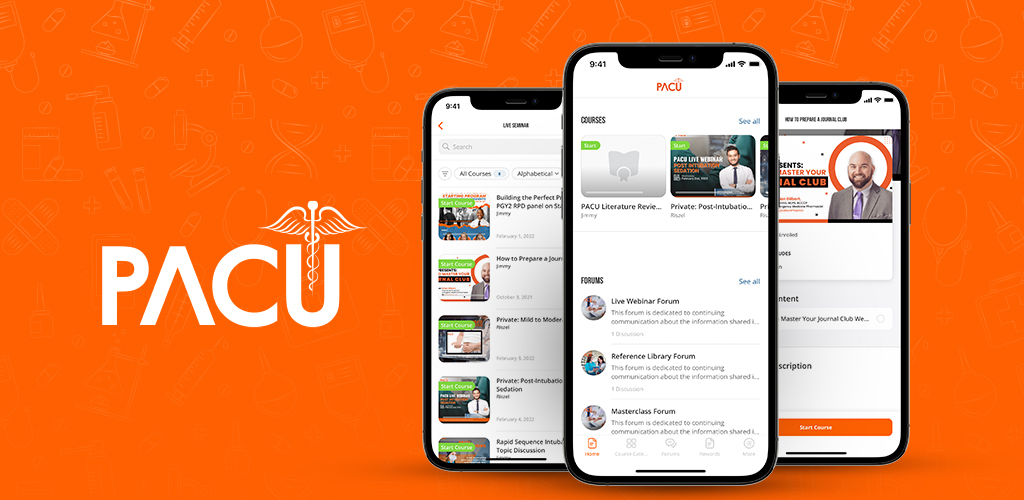
Log in to a personalized learning hub with your courses, progress tracking, CE transcripts, and curated content all in one place.
Learn at Your Pace
Watch lectures, read literature summaries, complete assessments, and earn CE credits on your schedule—from any device.
Advance Your Career
Build clinical expertise, earn board certifications, and join a community of pharmacy professionals committed to excellence.
One Platform. Three Paths to Excellence.
Start where you are. Upgrade when you're ready. PACULit & Core include a free 7-day trial.
PACULit
Never miss a practice-changing study
or $60/year (Save 50%)
- 3 curated studies per week (15/month)
- 5-minute audio summaries for each study
- Monthly CE courses (3-5 hours accredited)
- Access to 5 specialty tracks
- Email delivery + mobile access
- Course library (136+ courses)
- Board certification prep
Card required — no charge until day 8
PACU Core
Your complete education platform
or $199.99/year (Save 33%)
- Everything in PACULit, plus:
- 136+ in-depth courses across all specialties
- Landmark Trials Database
- Clinical Guidelines Repository
- Up to 10 hours CE monthly
- Pharmacy Pearls newsletter access
- Board certification Q-Banks
Card required — no charge until day 8
PACUPremium
Board certification prep + full PACU Core access
+ $119–$189 Enrollment Fee
- BCEMP Q-Bank (1,000+ questions)
- Full PACU Core access included
- 136+ pharmacotherapy courses
- Complete study guides & explanations
- Performance analytics & weak area ID
- Pass Guarantee—free extension if needed
Pass Guarantee included
Compare All Features
| Features |
PACULit $9.99/mo |
PACU Core $24.99/mo |
PACUPremium $49.99/mo or one-time |
|---|---|---|---|
| Weekly Literature Summaries (15/mo) | |||
| 5-Minute Audio Summaries | |||
| 5 Specialty Tracks | |||
| Monthly CE Credits | 3-5 hours | Up to 10 hours | Up to 10 hours |
| Course Library (136+ courses) | — | ||
| Landmark Trials Database | — | ||
| Clinical Guidelines Repository | — | ||
| Pharmacy Pearls newsletter | — | ||
| Board Prep Q-Banks (BCPS/BCCCP/BCEMP) | — | — | |
| Pass Guarantee | — | — | |
| Priority Support | — | — |
Built for Every Stage of Your Career
Residents & Students
Building your foundation? Get structured learning paths, board certification prep, and the knowledge base to excel in residency and beyond.
Best fit: PACUPremiumClinical Pharmacists
Already practicing? Stay current with the latest evidence, earn CE credits efficiently, and enhance your clinical decision-making without disrupting your workflow.
Best fit: PACULit or CorePreceptors & Educators
Teaching the next generation? Access comprehensive resources, fresh content for discussions, and stay at the cutting edge to enhance your program.
Best fit: PACU CoreWhat Pharmacists Are Saying
“PACULit completely changed how I stay current. Instead of spending hours sifting through PubMed, I get concise, clinically relevant summaries delivered to my inbox. The audio summaries during my commute are a game-changer.”
Dr. Sarah Chen, PharmD, BCPS
Critical Care Clinical Pharmacist
“As a PGY-2 resident, I needed a structured way to build my knowledge base. PACU Core's courses are taught by practicing clinicians who actually understand what we face on the floor. Worth every penny.”
Marcus Williams, PharmD
PGY-2 Resident — Critical Care
“I passed my BCEMP on the first attempt thanks to PACUPrep. The structured study plan kept me on track, and the practice exams were incredibly close to the real thing. I can't recommend it enough.”
Amanda Torres, PharmD, BCEMP
Emergency Medicine Pharmacist
Frequently Asked Questions
How is PACU different from other pharmacy CE platforms?
Can I try before I commit?
What's the difference between PACULit, Core, and Premium?
Is the continuing education ACPE accredited?
How does the board certification prep work?
Can I cancel anytime?
Still have questions? Contact us →
Ready to Transform Your Pharmacy Practice?
Join thousands of pharmacists who trust PACU for their continuing education, professional development, and board certification success.
Free 7-day trial on PACULit & Core · Cancel anytime