High-Dose Nitroglycerin for Sympathetic Crashing Acute Pulmonary Edema

High-Dose Nitroglycerin for Sympathetic Crashing Acute Pulmonary Edema (SCAPE)

Pharmacy Friday Pearl – Pharmacy & Acute Care University

Download PDF

Introduction

  • SCAPE is a form of hypertensive heart failure triggered by a surge in catecholamines.
  • The result is pulmonary capillary leakage and alveolar flooding.
  • Management includes non-invasive ventilation and pharmacologic agents such as nitroglycerin.
  • Dose-dependent afterload reduction with nitroglycerin requires doses >50–150 mcg/min.

Pharmacology of Nitroglycerin (NTG)

Parameter Details
Mechanism of Action Organic nitrate vasodilator that reduces tension on vascular smooth muscle and dilates peripheral veins and arteries (at higher doses).
Dose • Chest pain: 5–400 mcg/min (starting at 5 mcg/min)
• Pulmonary edema/afterload reduction: 50–400 mcg/min
Titrate to symptom improvement and tolerated blood pressure
Administration • IV infusion: 50–400 mcg/min until symptom resolution
• IV bolus: 400–2000 mcg over 2–5 min (check hospital policy)
• Sublingual: 400 mcg tab, 2–4 tablets (≈160–320 mcg/min IV)
• Ointment: slow onset 30–60 min
PK/PD • Onset: IV 1–5 min; SL 1–3 min
• Peak: 3–15 min
• Duration: IV 5–10 min; SL 10–60 min
• Elimination: 22% renal
Adverse Effects Headache, hypotension, syncope, rebound hypertension, tolerance with prolonged use (~24 hrs)
Warnings/Interactions • PDE inhibitors
• Aortic stenosis, preload-dependent cardiomyopathy, hypertrophic obstructive cardiomyopathy, hypotension at any time
Compatibility Incompatible with levofloxacin, SMX-TMP, daptomycin, and phenytoin

Clinical pearl: Higher doses of IV or bolus nitroglycerin may reduce ICU admissions and intubation risk in SCAPE.

Overview of Key Evidence

Author/Year Design (n) Intervention & Comparison Key Findings
Patrick, 2020 Observational (n=48) IV NTG 1 mg bolus by EMS ↓SBP by 31 mmHg, ↓HR by 10 bpm, ↑O2 from 86% to 98%; 2% symptomatic hypotension
Hsieh, 2018 Case Report (n=3) SL NTG 0.6 mg x 3, IV NTG bolus 1 mg Q2 min, then infusion 40 mcg/min Normalized respiratory status, avoided intubation & ICU admission
Paone, 2018 Case Report (n=1) IV NTG 400 mcg/min titrated Symptom resolution at 6 minutes
Wilson, 2016 Observational (n=395) IV NTG bolus (500–2000 mcg) Q3–5 min vs infusion vs both ↓ICU admissions, shorter LOS, no increase in intubations
Levy, 2007 Observational (n=29) IV NTG bolus 2 mg IV Q3 min ↓Intubation, ↓BiPAP/ICU admission
Sharon, 2000 RCT (n=40) IV isosorbide bolus 4 mg Q4 min vs infusion + BiPAP ↓Intubation, MI, mortality; ↑PaO₂
Cotter, 1998 RCT (n=104) IV isosorbide bolus 3 mg Q5 min + furosemide vs infusion titration ↓MV & MI, ↑PaO₂, fewer adverse effects

Clinical Conclusions

  • High-dose nitroglycerin (bolus and/or infusion) is effective in rapidly reducing preload and afterload in SCAPE.
  • Doses of ≥400 mcg/min (or equivalent bolus) are supported by case reports and observational studies.
  • High-dose IV or sublingual NTG has been associated with improved respiratory status, fewer ICU admissions, and reduced need for intubation.
  • Symptomatic hypotension is rare but monitoring is necessary, especially with bolus regimens.
  • Bolus dosing strategies may outperform continuous infusions in acute SCAPE decompensation.

Full Reference List

  1. Nitroglycerin. Micromedex [Electronic version]. Greenwood Village, CO: Truven Health Analytics. Retrieved March 5, 2020, from http://www.micromedexsolutions.com/
  2. Kramer K. Am Heart J. 2000;140:451–5.
  3. Agrawal N. Crit Care Med. 2016;20:39–43.
  4. Mebazaa A. Eur J Heart Fail. 2015;17:544–58.
  5. Viau DM. Heart. 2015;101:1861–7.
  6. McMurray JJ. Eur J Heart Fail. 2012;14:803–69.
  7. López-Rivera F. Am J Case Rep. 2019 Jan 21;20:83–90.
  8. Clemency BM. Prehosp Disaster Med. 2013 Oct;28(5):477–81.
  9. Yancy CW. J Am Coll Cardiol. 2013;62:e147–239.
  10. Hsieh Y. Turk J Emerg Med. 2018;18(1):34–36.
  11. Wilson SS. Am J Emerg Med. 2017;35(1):126–31.
  12. Levy P. Ann Emerg Med. 2007;50:144–52.
  13. Sharon A. J Am Coll Cardiol. 2000;36(3):832–7.
  14. Cotter G. Lancet. 1998;351(9100):389–93.
  15. Paone S. Am J Emerg Med. 2018;36(8):1526.e5–1526.e7.
  16. Patrick C. Prehosp Emerg Care. 2020 Jan 27:1–7.
The Use of Norepinephrine vs Epinephrine in Post Cardiac Arrest Shock

The Use of Norepinephrine vs Epinephrine in Post Cardiac Arrest Shock

Pharmacy Friday Pearl – Pharmacy & Acute Care University

Download PDF

Introduction

  • The effects of epinephrine on animal hemodynamics have been studied since the late 1800s with recent concern regarding deleterious complications with cerebral and myocardial oxygen supply.
  • Recently, norepinephrine has been considered post cardiac arrest to minimize complications associated with epinephrine.

Pharmacology of Epinephrine and Norepinephrine

Category Epinephrine Norepinephrine
Dose Weight-based: 0.01–1 mcg/kg/min
Non-weight-based: 1–80 mcg/min
Institutional infusion rates may vary
Weight-based: 0.05–1 mcg/kg/min (initiate at 0.05–0.15)
Non-weight-based: 5–80 mcg/min (initiate at 5–15)
Institutional infusion rates may vary
Pharmacokinetics Onset: Immediate
Distribution: 1–2 min to peak
Metabolism: hepatic
Elimination: urine (inactive metabolites)
Half-life: <5 min
Onset: Immediate
Distribution: 1–2 min to peak
Metabolism: hepatic
Elimination: urine (inactive metabolites)
Half-life: <5 min
Adverse Effects Tachyarrhythmias, myocardial ischemia, extravasation leading to necrosis
Mechanism of Action α agonist → Peripheral vasoconstriction → ↑ myocardial & cerebral blood flow
β agonist → ↑ heart rate & contractility → ↑ myocardial oxygen demand
Compatibility Refer to institutional policies for line compatibility and Y-site administration.

Clinical pearl: Norepinephrine may offer a hemodynamic advantage over epinephrine in certain post-arrest scenarios.

Overview of Key Evidence

Author/Year Design (n) Key Findings
Bougouin, 2022 Retrospective (N=766) Epinephrine group had higher all-cause hospital mortality (OR 2.6; 95% CI 1.4–4.7; P=0.002) and more CPC 3–5 at discharge.
Weiss, 2021 Retrospective (N=93) EPI group had more refractory hypotension, rearrest, or death in ED (50% vs 22.2%; P=0.008); adjusted odds of adverse events 3.94 times higher (P=0.013).
Mion, 2014 Case report (N=1) After recurrent VF with epinephrine, transition to norepinephrine led to ROSC and full recovery post ICU stay.
Kim, 2012 Retrospective (N=90) Survivors were more likely to have received norepinephrine (34.8% vs 22.6%); even more pronounced in prolonged arrest group (42.85% vs 25%).

Clinical Conclusions

  • It remains controversial whether epinephrine is the preferred vasopressor post-cardiac arrest.
  • Norepinephrine is a reasonable alternative post-arrest, particularly when adverse effects from epinephrine are of concern.

Full Reference List

  1. Micromedex [Electronic version]. Greenwood Village, CO: Truven Health Analytics. Accessed 2022, March 15. http://www.micromedexsolutions.com/
  2. Callaway C. Epinephrine for cardiac arrest. Current Opinion in Cardiology. 2013;28(1):36-42.
  3. Epinephrine [package insert] Lake Forest, IL: Hospira, Inc.; 2019.
  4. Kim et al. THE BENEFIT OF NOREPINEPHRINE INFUSION FOR HEMODYNAMIC SUPPORT FOLLOWING CARDIOPULMONARY ARREST AND RESUSCITATION. Critical Care Medicine. 2012;40(12):1-328.
  5. Mion G, et al. Cardiac arrest: should we consider norepinephrine instead of epinephrine? Am J Emerg Med. 2014;32(12):1560.e1-2. PMID: 24997106.
  6. Weiss A, et al. Comparison of Clinical Outcomes with Initial Norepinephrine or Epinephrine for Hemodynamic Support After Return of Spontaneous Circulation. Shock. 2021;56(6):988-993. PMID: 34172611.
  7. Bougouin W, et al. Epinephrine versus norepinephrine in cardiac arrest patients with post-resuscitation shock. Intensive Care Med. 2022;48(3):300-310. PMID: 35129643.

Procainamide for Wide Complex Tachycardia

Procainamide for Wide Complex Tachycardia

Pharmacy Friday Pearl – Pharmacy & Acute Care University

Download PDF

Introduction

  • Ventricular tachycardia (VT) is an uncommon but dangerous medical condition with an extremely variable clinical presentation.
  • Intravenous procainamide is guideline recommended and is the drug of choice for hemodynamically stable VT with a class IIa recommendation.
  • Procainamide is an old drug with new evidence supporting its use, but dosing strategies and administration techniques make it difficult to use at the bedside.

Procainamide

Parameter Details
Bolus Dose 10–17 mg/kg over 20–60 minutes (Max dose 1g, max rate 20–50 mg/min) OR 100 mg every 5 minutes (max rate 50 mg/min) up to 1g
Renal Adjustments eCrCl 10–50 ml/min: reduce dose by 25–50%
eCrCl <10 ml/min: reduce dose by 50–75%
Maintenance Infusion 1–6 mg/min
Mechanism Class 1A anti-arrhythmic; blocks fast sodium channels, prolongs action potential, reduces impulse conduction speed
PK/PD IV Onset: <2 min; IM: 10–30 min
IV Peak: 25–60 min; IM: 15–60 min
Duration: 3–4 hrs
Metabolism: Hepatic to active NAPA
Half-life: 2.5–4.7 hrs (NAPA: 7 hrs)
Excretion: 40–70% renally unchanged
Adverse Effects Hypotension, hepatotoxicity, lupus-like syndrome, positive ANA, anaphylaxis (sulfite), MG exacerbation, angioedema
Drug Interactions Interacts with diazepam, diltiazem, milrinone, phenytoin, hydralazine
Compatibility Compatible: 0.9% NaCl, 0.45% NaCl
Incompatible: D5 (variable), LR, D5NS

Clinical Pearl: Define institutional dosing and administration policies due to variable strategies in the literature and risk of adverse events.

Overview of Key Evidence

Author/Year Design (n) Key Findings
Ortiz, 2017 RCT (n=62) Procainamide: 67% VT termination; 9% major cardiac adverse
Amiodarone: 38% VT termination; 41% adverse
Marill, 2010 Multicenter cohort (n=187) VT termination: Amio 25%, Procainamide 30%
Komura, 2010 Retrospective (n=90) Procainamide terminated 75.7% VT vs. Lidocaine 35%
Marill, 2006 Case series (n=33) Amio VT termination: 29%; 6% needed cardioversion
Gorgels, 1996 Randomized (n=79) Procainamide terminated 79% VT vs. Lidocaine 19% (p<0.001)
Callans, 1992 Observational (n=15) VT termination rate 93% with median 600 mg procainamide

Clinical Conclusions

  • Procainamide is guideline-supported for stable VT (Class IIa).
  • Use empiric 10–17 mg/kg bolus dosing up to 1g.
  • Consider renal function for bolus dose reductions.
  • Initiate maintenance infusion at 1–6 mg/min after bolus.
  • Clearly define hospital protocols to avoid variability.

Full Reference List

  1. Procainamide. Micromedex [Electronic version]. Greenwood Village, CO: Truven Health Analytics. Retrieved July 6, 2020, from http://www.micromedexsolutions.com/
  2. Long B, Koyfman A. Best Clinical Practice: Emergency Medicine Management of Stable Monomorphic Ventricular Tachycardia. J Emerg Med. 2017;52:484-492.
  3. Ortiz M, Martín A, Arribas F, et al. Randomized comparison of intravenous procainamide vs. intravenous amiodarone for the acute treatment of tolerated wide QRS tachycardia: the PROCAMIO study. Eur Heart J. 2017;38(17):1329-1335.
  4. Marill KA, deSouza IS, Nishijima DK, et al. Amiodarone or procainamide for the termination of sustained stable ventricular tachycardia: an historical multicenter comparison. Acad Emerg Med. 2010;17(3):297-306.
  5. Komura S, Chinushi M, Furushima H, et al. Efficacy of procainamide and lidocaine in terminating sustained monomorphic ventricular tachycardia. Circ J. 2010;74(5):864-869.
  6. Marill KA, deSouza IS, Nishijima DK, et al. Amiodarone is poorly effective for the acute termination of ventricular tachycardia. Ann Emerg Med. 2006;47(3):217-224.
  7. Gorgels AP, van den Dool A, Hofs A, et al. Comparison of procainamide and lidocaine in terminating sustained monomorphic ventricular tachycardia. Am J Cardiol. 1996;78(1):43-46.
  8. Callans DJ, Marchlinski FE. Dissociation of termination and prevention of inducibility of sustained ventricular tachycardia with infusion of procainamide: evidence for distinct mechanisms. J Am Coll Cardiol. 1992;19(1):111-117.
  9. Wellens HJ, Bär FW, Lie KI, et al. Effect of procainamide, propranolol and verapamil on mechanism of tachycardia in patients with chronic recurrent ventricular tachycardia. Am J Cardiol. 1977;40(4):579-585.
```

Statins for STEMI in the Emergency Department

Introduction

  1. STEMI (ST-Elevation Myocardial Infarction) represents a critical emergency where timely intervention is crucial. Atorvastatin, a statin, has been investigated for its potential benefits when administered early during a STEMI.
  2. Early administration of atorvastatin may have pleiotropic effects beyond cholesterol lowering. Potential benefits include stabilization of atherosclerotic plaques, reduction of inflammation, and improved endothelial function.
  3. Guidelines recommend initiating high-intensity statin therapy as soon as possible in STEMI patients.
  4. This pharmacy pearl summarizes the pharmacology and evidence supporting the use of atorvastatin in this setting.

Pharmacology

  Atorvastatin  Rosuvastatin 
Dose 80 mg orally once daily 40 mg orally once daily
Administration Oral Oral
PK/PD Onset: 3-5 days for LDL reduction; Peak effect: 2-4 weeks Onset: 3-5 days for LDL reduction; Peak effect: 2-4 weeks
Adverse Effects Myopathy, elevated liver enzymes, gastrointestinal symptoms Myopathy, elevated liver enzymes, gastrointestinal symptoms
Drug Interactions and warnings CYP3A4 inhibitors/inducers can affect levels; avoid in active liver disease Minimal CYP interactions; avoid in active liver disease
Compatibility Compatible with most cardiovascular drugs, monitor for interactions with CYP3A4 inhibitors Compatible with most cardiovascular drugs, minimal interactions
Comments High-intensity statin recommended post-STEMI to reduce recurrence risk High-intensity statin alternative to atorvastatin

Overview of Evidence

Author, Year Design/Sample Size Intervention & Comparison Outcome
Schwartz, 2001 Randomized Controlled Trial (n=3086) Atorvastatin (80 mg/day) vs. placebo initiated 2496 hours after acute coronary syndrome Atorvastatin reduced recurrent symptomatic ischemia requiring rehospitalization (6.2% vs 8.4%; RR, 0.74; P=0.02)
Li, 2012 Randomized Controlled Trial (n=161) High-dose atorvastatin (80 mg) vs. placebo in patients with STEMI undergoing PCI High-dose atorvastatin significantly reduced the incidence of contrast-induced nephropathy (2.6% vs 15.7%; P=0.01)
Liu, 2013 Randomized Controlled Trial (n=102) Loading dose of atorvastatin (80 mg) before PCI vs. no loading dose Loading dose of atorvastatin reduced high-sensitivity C-reactive protein, B-type natriuretic peptide, and matrix metalloproteinase type 9, indicating reduced inflammation and improved cardiac function (P<0.05)
Xu, 2016 Randomized Controlled Trial (n=120) Intensive atorvastatin (40 mg) vs. standard atorvastatin (20 mg) in STEMI patients undergoing PCI Intensive atorvastatin significantly reduced serum endothelin-1 levels and ADP-induced platelet clot strength, improving endothelial function and platelet inhibition (P<0.05)
Kim, 2015 Randomized Controlled Trial (n=67) High-dose atorvastatin (80 mg) before PCI vs. low-dose atorvastatin (10 mg) No significant reduction in myocardial damage; however, high-dose pretreatment is generally considered safe and well-tolerated
Gavazzoni, 2017 Randomized Controlled Trial (n=52) High-dose atorvastatin (80 mg) vs. moderate dose (20 mg) in STEMI patients High-dose atorvastatin showed significant improvement in endothelial function (RH-PAT index 1.96±0.16 vs 1.72±0.19; P=0.002) and reduced levels of high-sensitivity CRP and IL6 (P<0.05)
Liu, 2013 Randomized Controlled Trial (n=102) Loading dose of atorvastatin (80 mg) before PCI vs. no loading dose Loading dose of atorvastatin significantly lowered inflammatory markers and improved left ventricular ejection fraction compared to no loading dose (P<0.05)
Adel, 2022 Randomized Controlled Trial (n=99) High-dose rosuvastatin (40 mg) vs. high-dose atorvastatin (80 mg) before PCI in STEMI patients Atorvastatin group had lower CTFC and better TIMI flow grade compared to control, and both statins improved microvascular myocardial perfusion (P<0.01)
Chen, 2022 Randomized Controlled Trial (n=98) Enhanced-dose atorvastatin (40 mg before PCI, 40 mg/day post-PCI, 20 mg/day after 1 week) vs. standarddose atorvastatin (20 mg/day) Enhanced-dose atorvastatin improved cardiac output, LVEF, TIMI blood flow classification, and reduced incidence of major adverse cardiac events (P<0.05)

Conclusions

  • Efficacy: High-intensity atorvastatin (80 mg) initiated early in the ED for STEMI patients reduces the risk of subsequent cardiovascular events and mortality. 
  • Safety: Generally well-tolerated with a similar side effect profile to other statins, though monitoring for myopathy and liver enzyme elevations is necessary.
  • Recommendation: Incorporating early administration of atorvastatin 80 mg for STEMI patients in the ED aligns with current guidelines and improves patient outcomes.

References

  1. Micromedex [Electronic version].Greenwood Village, CO: Truven Health Analytics. Retrieved July 1 2024, from http://www.micromedexsolutions.com/
  2. Schwartz GG, Olsson AG, Ezekowitz MD, et al. Effects of atorvastatin on early recurrent ischemic events in acute coronary syndromes: the MIRACL study: a randomized controlled trial. JAMA. 2001;285(13):1711-1718.
  3. Liu H, Yang Y, Yang SL, et al. Administration of a loading dose of atorvastatin before emergency PCI reduces myocardial damage in patients with STEMI. Clin Ther. 2013;35(1):22-30. 
  4. Li W, Fu X, Wang Y, et al. Beneficial effects of high-dose atorvastatin pretreatment on microvascular obstruction and left ventricular function in STEMI patients undergoing primary PCI. Cardiology. 2012;123(4):212-220. 
  5. Kim EK, Hahn J, Song Y, et al. Effects of high-dose atorvastatin pretreatment on microvascular obstruction in STEMI patients undergoing primary PCI. J Korean Med Sci. 2015;30(4):435-441. 
  6. Xu X, Liu Y, Li K, et al. Intensive atorvastatin improves endothelial function and reduces inflammation in STEMI patients undergoing primary PCI. Int J Cardiol. 2016;220:616-621.
  7. Gavazzoni M, Lombardi CM, Vizzardi E, et al. Role of early high-dose atorvastatin loading in STsegment elevation myocardial infarction: real-life experience. J Cardiovasc Med (Hagerstown). 2017;18(6):406-411.
  8. Adel EM, Elberry A, Abdel Aziz A, Ibrahim MA, Abdelaal FA. Comparison of the treatment efficacy of rosuvastatin versus atorvastatin in preventing microvascular obstruction in patients undergoing primary PCI for STEMI. J Clin Med. 2022;11(17):5142.
  9. Chen Y, Zhang J, Huo Y, et al. Effects of atorvastatin on coronary microvascular function in STEMI patients undergoing primary PCI: a randomized controlled trial. J Am Coll Cardiol. 2022;79(9):901911.

Piperacillin-tazobactam plus Vancomycin and Acute Kidney Injury by Caroline Rosario


Introduction

  1. Vancomycin and piperacillin-tazobactam are combined for broad-spectrum antibiotic coverage including MRSA and Pseudomonas in hospitalized patients.
  2. AKI, often as acute tubular necrosis, is a known complication of vancomycin, especially with higher doses and co-administration of nephrotoxic drugs.
  3. Piperacillin-tazobactam alone has minimal nephrotoxicity (<1%); its nephrotoxicity is usually due to acute interstitial nephritis.
  4. Reported AKI rates vary in literature based on AKI definition and target population.
  5. Both drugs affect OAT1/3 transporters in the kidney, which are crucial for creatinine clearance and are especially significant in patients with CKD.

Pharmacology

 VancomycinPiperacillin-tazobactam4
DoseDepends on infection and PK/PD target General dosing for systemic infections: IV 15-20 mg/kg IV Q8-12H for systemic infectionsStandard infusion: 3.375 g IV Q6H over 30 minAntipseudomonal: 4.5 g IV Q6-8H over 30 minExtended infusion: 4.5 g IV then 3.375-4.5 g over 4 hours Q8H
AdministrationAdminister IV over ≥60 minutes at concentrations ≤5 mg/mL to reduce the risk of vancomycin infusion reactionStandard infusion: Infuse over 30 min Extended infusion: Infuse loading dose over 30 min, start maintenance dose four hours later infused over 4 hours
PK/PDNegligible oral bioavailability T1/2 = 4-6 hours Renally eliminated (40-100% unchanged) AUC:MIC dependent kinetics, PK/PD target AUC/MIC ≥400 µg/mL; surrogate serum trough concentrations often usedT1/2 = 0.7-1.2 hours Renally eliminated (80% unchanged) Dose adjust at CrCl<40 T>MIC dependent kinetics, prolonged infusions enhance efficacy
Adverse EffectsNephrotoxicity Ototoxicity Vancomycin-infusion reaction (flushing, hypotension, tachycardia)GI upset (diarrhea, nausea, constipation) Headache Rash, pruritis
Drug Interactions and warningsSubstrate of OAT1/3 +/- Inducer of OAT1/3 ↑ nephrotoxicity: aminoglycosides, aspirin  Piperacillin: substrate and inhibitor of OAT1/3, Tazobactam: substrate of OAT1/3 Interactions: Probenecid (↑ piperacillin-tazobactam), Methotrexate (↑ methotrexate)
CompatibilityCompatible with dextrose, NS, LR Incompatible with lipid emulsionLR: only the formulation containing EDTA is compatible for Y-site administration Not chemically stable in solutions containing sodium bicarbonate or solutions that significantly alter pH Cannot be added to blood products or albumin hydrolysates
CommentsSerum troughs are a poor proxy of 24-hour AUC, trough-guided regimens have been shown to exceed the target AUC in 60% of adults10Useful in the ED for anaerobic coverage in Grade III open fractures, pneumonia with lung abscess or empyema, and empiric antipseudomonal coverage in patients with risk factors
∆ = meropenem is also a substrate of OAT1/3 but not an inhibitor

Overview of Evidence

Author, yearDesign/ sample sizeIntervention & ComparisonAKI definitionOutcome
Sanz et al., 2002Prospective, multi-center (n = 969)Amikacin+cefepime vs. amikacin+piperacillin-tazobactam↑ SCr ≥50% from baselineNo difference in severe nephrotoxicity between amikacin+piperacillin-tazobactam vs. amikacin+cefepime
Karino et al., 2016Retrospective cohort and nested case-control studies (n = 320)Vancomycin+piperacillin-tazobactam standard infusion vs. Vancomycin+piperacillin-tazobactam extended-infusionRIFILE criteriaAKIN criteriaVancomycin consensus guideline definitionAKI occurred in 33% of patients receiving vancomycin+piperacillin-tazobactamUse of extended infusion piperacillin-tazobactam did not increase risk of AKI Highest daily incidence of AKI occurred on day 5 of combination therapy
Hammond et al., 2017Meta-analysis of 14 observational studies (n = 3549)Vancomycin+piperacillin-tazobactam vs. vancomycin+any β-lactam or vancomycin aloneAll included studies used one of the following: RIFLE criteriaAKIN criteria↑ SCr ≥100% or >0.5 mg/dLVancomycin+piperacillin-tazobactam greater association with AKI (aOR, 3.11; 95% CI, 1.77–5.47) Highest incidence of AKI in patients admitted to the ICU (OR 3.83 95% CI, 1.67-8.78)
Rutter et al., 2017Retrospective matched cohort (n = 4103)Vancomycin+piperacillin-tazobactam vs. vancomycin+cefepimeRIFLE criteriaVancomycin+piperacillin-tazobactam 2.18 times more likely to cause AKI vs. vancomycin+cefepime (95% CI, 1.64–2.94) Vancomycin doses between 3 and 4 g daily used,
Peyko et al., 2017Prospective observational cohort (n = 85)Vancomycin+piperacillin-tazobactam vs. vancomycin+cefepime or vancomycin+meropenemKDIGOIncidence of AKI was higher in with  vancomycin+piperacillin-tazobactam vs. vancomycin+cefepime or meropenem (37.3% vs. 7.7% P = .005) 
Rutter and Burgess et al., 2017Retrospective matched cohort (n = 2448)Vancomycin+piperacillin-tazobactam vs. Vancomycin+ampicillin-sulbactamRIFLE criteriaIncreased risk of AKI with vancomycin+piperacillin-tazobactam (aOR, 1.77; 95% CI, 1.26–2.46), no increased rate of AKI with vancomycin+ampicillin-sulbactamRates of AKI similar for piperacillin-tazobactam and ampicillin-sulbactam without vancomycin
Jeon et al., 2017Retrospective matched cohort (n = 5335)Vancomycin+piperacillin-tazobactam vs. vancomycin+cefepime↑ SCr ≥0.3 mg/dL or ≥50% from baselineVancomycin+piperacillin-tazobactam associated with a higher risk of AKI vs. vancomycin-cefepime (aHR, 1.25; 95% CI, 1.11–1.42.)
Mousavi et al., 2017Retrospective matched cohort (n = 280)Vancomycin+piperacillin-tazobactam standard infusion vs. Vancomycin+piperacillin-tazobactam extended-infusion  RIFLE criteriaAKIN criteriaSimilar rate of AKI between vancomycin+piperacillin-tazobactam standard infusion vs. vancomycin+piperacillin-tazobactam extended-infusionHigher vancomycin troughs were observed in the extended infusion group
Miano et al., 2022Prospective, observationalVancomycin+piperacillin-tazobactam vs. vancomycin+cefepime for ≥48 hours↑ SCr vs. ↑ Cystatin C vs. ↑ BUNVancomycin + piperacillin-tazobactam ➡️ ↑ serum creatinine-defined AKI, but no change in cystatin C, BUN, or AKI outcomes (dialysis/mortality).Indicates vancomycin + piperacillin-tazobactam AKI may be pseudotoxicity.
Qian et al, 2023 (ACORN Trial)Randomized controlled Trial N=2511Vancomycin+piperacillin-tazobactam vs. vancomycin+cefepimeKDIGO  ↑ SCr ≥0.3 mg/dL or ≥50% from baselineThe highest stage of acute kidney injury or death was not significantly different between the cefepime group and the piperacillin-tazobactam groupThe incidence of major adverse kidney events at day 14 did not differ between groups (124 patients [10.2%] in the cefepime group vs 114 patients [8.8%] in the piperacillintazobactam group~77% of each concurrently received vancomycin

RIFLE, AKIN and KDIGO definitions of AKI are based upon ↑ in serum creatinine or ↓ in urine output


Conclusions

  • Since 2011, evidence indicates combined vancomycin+ piperacillin-tazobactam may be nephrotoxic.
    • Most studies were retrospective, defining nephrotoxicity by creatinine-based AKI.
  • Recent data show this AKI definition doesn’t align with severe AKI outcomes (hemodialysis/mortality).
  • Non-tubular secretion biomarkers (Cystatin C, BUN) didn’t show the same AKI increase.
  • Despite >50 studies linking the drug combo with AKI, some expert report true renal risk is likely minimal.
  • In emergencies, timely antibiotic use is vital; nephrotoxicity concerns shouldn’t delay this combo, especially for short use.

References

  1. Micromedex [Electronic version].Greenwood Village, CO: Truven Health Analytics. Retrieved October 4, 2023, from http://www.micromedexsolutions.com/
  2. VANCOMYCIN HYDROCHLORIDE [package insert]. Rockford, IL: Mylan Institutional LLC; Jul, 2018.
  3. Blair M, Côté JM, Cotter A, Lynch B, Redahan L, Murray PT. Nephrotoxicity from Vancomycin Combined with Piperacillin-Tazobactam: A Comprehensive Review. Am J Nephrol. 2021;52(2):85-97. doi: 10.1159/000513742.
  4. Pill MW, O’Neill CV, Chapman MM, Singh AK. Suspected acute interstitial nephritis induced by piperacillin-tazobactam. Pharmacotherapy. 1997 Jan-Feb;17(1):166-9..
  5. Li H, Yang Q, Gui M, Ding L, Yang L, Sun H, Li Z. Changes of renal transporters in the kinetic process of VCM-induced nephrotoxicity in mice. Toxicol Res (Camb). 2021 Jun 9;10(4):687-695. doi: 10.1093/toxres/tfab048. PMID: 34484661; PMCID: PMC8403606.
  6. Giuliano CA, Patel CR, Kale-Pradhan PB. Is the Combination of Piperacillin-Tazobactam and Vancomycin Associated with Development of Acute Kidney Injury? A Meta-analysis. Pharmacotherapy. 2016 Dec;36(12):1217-1228. doi: 10.1002/phar.1851.
  7. Boucher, H. (2023) Piperacillin-tazobactam, Sanford Guide Web Edition. Available at: https://webedition.sanfordguide.com/en/drug-information/antibacterial-agents/penicillins/anti-pseudomonal-penicillins/piperacillin-tazobactam (Accessed: 12 October 2023).
  8. Yang S, Liu Z, Wang C, Wen S, Meng Q, Huo X, Sun H, Ma X, Peng J, He Z, Liu K. Piperacillin enhances the inhibitory effect of tazobactam on β-lactamase through inhibition of organic anion transporter 1/3 in rats. Asian J Pharm Sci. 2019 Nov;14(6):677-686. doi: 10.1016/j.ajps.2018.11.003.
  9. Landersdorfer CB, Kirkpatrick CM, Kinzig M, Bulitta JB, Holzgrabe U, Sörgel F. Inhibition of flucloxacillin tubular renal secretion by piperacillin. Br J Clin Pharmacol. 2008 Nov;66(5):648-59. doi: 10.1111/j.1365-2125.2008.03266.x.
  10. Neely MN, Youn G, Jones B, Jelliffe RW, Drusano GL, Rodvold KA, Lodise TP. Are vancomycin trough concentrations adequate for optimal dosing? Antimicrob Agents Chemother. 2014;58(1):309-16. doi: 10.1128/AAC.01653-13.
  11. Alvarez-Arango S, Ogunwole SM, Sequist TD, Burk CM, Blumenthal KG. Vancomycin Infusion Reaction – Moving beyond “Red Man Syndrome”. N Engl J Med. 2021 Apr 8;384(14):1283-1286. doi: 10.1056/NEJMp2031891. Epub 2021 Apr 3.
  12. Vallon V, Eraly SA, Rao SR, Gerasimova M, Rose M, Nagle M, Anzai N, Smith T, Sharma K, Nigam SK, Rieg T. A role for the organic anion transporter OAT3 in renal creatinine secretion in mice. Am J Physiol Renal Physiol. 2012 May 15;302(10):F1293-9. doi: 10.1152/ajprenal.00013.2012. Epub 2012 Feb 15. PMID: 22338083; PMCID: PMC3362066.
  13. Sanz MA, López J, Lahuerta JJ, Rovira M, Batlle M, Pérez C, Vázquez L, Julià A, Palau J, Gutiérrez M, Capote FJ, Ramos F, Benlloch L, Larrea L, Jarque I; Spanish PETHEMA Group. Cefepime plus amikacin versus piperacillin-tazobactam plus amikacin for initial antibiotic therapy in haematology patients with febrile neutropenia: results of an open, randomized, multicentre trial. J Antimicrob Chemother. 2002 Jul;50(1):79-88. doi: 10.1093/jac/dkf087. PMID: 12096010.
  14. Watkins RR, Deresinski S. Increasing Evidence of the Nephrotoxicity of Piperacillin/Tazobactam and Vancomycin Combination Therapy-What Is the Clinician to Do? Clin Infect Dis. 2017 Nov 29;65(12):2137-2143. doi: 10.1093/cid/cix675.
  15. Karino S, Kaye KS, Navalkele B, Nishan B, Salim M, Solanki S, Pervaiz A, Tashtoush N, Shaikh H, Koppula S, Martin ET, Mynatt RP, Murray KP, Rybak MJ, Pogue JM. Epidemiology of Acute Kidney Injury among Patients Receiving Concomitant Vancomycin and Piperacillin-Tazobactam: Opportunities for Antimicrobial Stewardship. Antimicrob Agents Chemother. 2016 May 23;60(6):3743-50. doi: 10.1128/AAC.03011-15.
  16. Hammond DA, Smith MN, Li C, Hayes SM, Lusardi K, Bookstaver PB. Systematic Review and Meta-Analysis of Acute Kidney Injury Associated with Concomitant Vancomycin and Piperacillin/tazobactam. Clin Infect Dis. 2017 Mar 1;64(5):666-674. doi: 10.1093/cid/ciw811. Epub 2016 Dec 10. PMID: 27940946.
  17. Rutter WC, Cox JN, Martin CA, Burgess DR, Burgess DS. Nephrotoxicity during Vancomycin Therapy in Combination with Piperacillin-Tazobactam or Cefepime. Antimicrob Agents Chemother. 2017 Jan 24;61(2):e02089-16. doi: 10.1128/AAC.02089-16. Erratum in: Antimicrob Agents Chemother. 2017 Mar 24;61(4): PMID: 27895019; PMCID: PMC5278703.
  18. Peyko V, Smalley S, Cohen H. Prospective Comparison of Acute Kidney Injury During Treatment With the Combination of Piperacillin-Tazobactam and Vancomycin Versus the Combination of Cefepime or Meropenem and Vancomycin. J Pharm Pract. 2017 Apr;30(2):209-213. doi: 10.1177/0897190016628960.
  19. Rutter WC, Burgess DS. Acute Kidney Injury in Patients Treated with IV Beta-Lactam/Beta-Lactamase Inhibitor Combinations. Pharmacotherapy. 2017 May;37(5):593-598. doi: 10.1002/phar.1918.
  20. Jeon N, Staley B, Klinker KP, Hincapie Castillo J, Winterstein AG. Acute kidney injury risk associated with piperacillin/tazobactam compared with cefepime during vancomycin therapy in hospitalised patients: a cohort study stratified by baseline kidney function. Int J Antimicrob Agents. 2017 Jul;50(1):63-67. doi: 10.1016/j.ijantimicag.2017.02.023.
  21. Mousavi M, Zapolskaya T, Scipione MR, Louie E, Papadopoulos J, Dubrovskaya Y. Comparison of Rates of Nephrotoxicity Associated with Vancomycin in Combination with Piperacillin-Tazobactam Administered as an Extended versus Standard Infusion. Pharmacotherapy. 2017 Mar;37(3):379-385. doi: 10.1002/phar.1901. E
  22. Miano TA, Hennessy S, Yang W, Dunn TG, Weisman AR, Oniyide O, Agyekum RS, Turner AP, Ittner CAG, Anderson BJ, Wilson FP, Townsend R, Reilly JP, Giannini HM, Cosgriff CV, Jones TK, Meyer NJ, Shashaty MGS. Association of vancomycin plus piperacillin-tazobactam with early changes in creatinine versus cystatin C in critically ill adults: a prospective cohort study. Intensive Care Med. 2022 Sep;48(9):1144-1155. doi: 10.1007/s00134-022-06811-0.
  23. Evans L, Rhodes A, Alhazzani W, Antonelli M, Coopersmith CM, French C, Machado FR, Mcintyre L, Ostermann M, Prescott HC, Schorr C, Simpson S, Wiersinga WJ, Alshamsi F, Angus DC, Arabi Y, Azevedo L, Beale R, Beilman G, Belley-Cote E, Burry L, Cecconi M, Centofanti J, Coz Yataco A, De Waele J, Dellinger RP, Doi K, Du B, Estenssoro E, Ferrer R, Gomersall C, Hodgson C, Møller MH, Iwashyna T, Jacob S, Kleinpell R, Klompas M, Koh Y, Kumar A, Kwizera A, Lobo S, Masur H, McGloughlin S, Mehta S, Mehta Y, Mer M, Nunnally M, Oczkowski S, Osborn T, Papathanassoglou E, Perner A, Puskarich M, Roberts J, Schweickert W, Seckel M, Sevransky J, Sprung CL, Welte T, Zimmerman J, Levy M. Surviving sepsis campaign: international guidelines for management of sepsis and septic shock 2021. Intensive Care Med. 2021 Nov;47(11):1181-1247. doi: 10.1007/s00134-021-06506-y.
  24. Qian ET, Casey JD, Wright A, Wang L, Shotwell MS, Siemann JK, Dear ML, Stollings JL, Lloyd BD, Marvi TK, Seitz KP, Nelson GE, Wright PW, Siew ED, Dennis BM, Wrenn JO, Andereck JW, Han JH, Self WH, Semler MW, Rice TW; Vanderbilt Center for Learning Healthcare and the Pragmatic Critical Care Research Group. Cefepime vs Piperacillin-Tazobactam in Adults Hospitalized With Acute Infection: The ACORN Randomized Clinical Trial. JAMA. 2023 Oct 24;330(16):1557-1567. doi: 10.1001/jama.2023.20583. PMID: 37837651; PMCID: PMC10576861.

Seizure Prophylaxis in Traumatic Brain Injury by Jordan Spurling


Introduction

  1. Traumatic brain injury (TBI) is a leading cause of death and disability in the United States.
  2. The Brain Trauma Foundation updated its guidelines for the management of severe TBI in 2016; however, there remains a lack of randomized clinical trials addressing many aspects of care in TBI patient.
  3. The incidence of early post-traumatic seizures may be as high as 30 percent in patients with severe TBI
  4. Antiseizure medications in acute management of TBI has been shown to reduce incidence of early seizures but has not been shown to prevent later development of epilepsy
  5. Prevention of early seizures is beneficial in order to prevent status epilepticus, further aggravating systemic injury.
  6. The Brain Trauma Foundation guidelines recommend phenytoin for early post-traumatic seizures for 7 days following injury, however levetiracetam is commonly used in this setting.

Pharmacology

 PhenytoinValproic AcidLevetiracetamLacosamide
DoseLoading dose: 17 to 20 mg/kg IV (max dose 2 g)   Maintenance dose: 100 mg every 8 hours or 5 mg/kg/day divided q8h (individual doses not to exceed 400 mg) Duration not to exceed 7 days10 – 15 mg/kg/dayLoading dose: 20 mg/kg IV infused over 5-20 min   Maintenance dose: 1 g IV over 15 min every 12 hours for 7 days (may be increased to 1.5 g q12)50 – 100 mg IV twice daily   May give loading dose of 200 mg
Administration IV piggyback rate of ≤50 mg/minuteIV piggyback over 60 minutes at a rate ≤20 mg/minuteIV push or piggyback over 5-20 minBolus: May be administered undiluted at ≤80 mg/minute   Infusion: over 30 to 60 minutes
PK/PDOnset: 30 min – 1 hour   Half-life:10 to 12 hours.Peak: <1 hour   Half-life:9 to 19 hoursPeak: 5-30 minutes   Half-life: 6-8 hoursPeak: < 1 hour   Half-life: ~13 hours
Adverse EffectsHematologic effects, cardiovascular effects, CNS effects, gingival hyperplasia, hepatotoxicityCNS effects, hematologic effects, hepatotoxicity, encephalopathy, pancreatitisCNS depression, hypersensitivity reactions, psychiatric and behavioral abnormalities, increased blood pressure, astheniaCardiac arrhythmias including bradycardia, AV block, CNS effects
WarningsVesicant, acute toxicityNot recommended for post-traumatic seizure prophylaxis in patients with acute head traumaCaution in renal impairment.Administer loading doses under medical supervision due to increased incidence of CNS adverse reactions

Guideline Recommendation

JournalRecommendations
Guidelines for the Management of Severe Traumatic Brain Injury, Fourth Edition – 2017Phenytoin is recommended to decrease the incidence of early PTS (within 7 d of injury), when the overall benefit is thought to outweigh the complications associated with treatment. There is insufficient evidence to recommend levetiracetam compared with phenytoin regarding efficacy in preventing early post-traumatic seizures and toxicity.

Overview of Evidence

Author, yearDesign/ sample sizeIntervention & ComparisonOutcome
Temkin, 1990A randomized, double-blind study   N = 404Phenytoin vs PlaceboWithin the first week 3.6% of phenytoin patients experienced seizure compared to 14.2% (p<0.001)   Between day 8-1 year 21.5% of patients in phenytoin group experienced seizure compared to 15.7% in placebo group   Phenytoin is effective in reducing seizures within the first 7 days after severe head injury
Young, 2004Randomized, Double-Blinded, Placebo- Controlled Trial in pediatric patients (age < 16 yo)

N = 102
Phenytoin vs Placebo for prevention of early posttraumatic seizuresDuring the 48-hour observation period, 3 of 46 (7%) patients in the phenytoin group and 3 of 56 (5%) patients in the placebo group experienced a posttraumatic seizure. No significant difference in survival or neurologic outcome between the two groups. Phenytoin did not significantly reduce the rate of posttraumatic seizures at 48 hours, neurologic outcomes, or overall survival at 30 days.
Jones, 2008Prospective, single-center trial   N = 32Phenytoin vs Levetiracetam in patients with severe TBI (GCS 3-8)Patients treated with levetiracetam and phenytoin had equivalent incidence of seizure activity (p = 0.556)   Patients receiving levetiracetam had a higher incidence of abnormal EEG findings (p = 0.003).   Levetiracetam is as effective as phenytoin in preventing early posttraumatic seizures but is associated with an increased seizure tendency on EEG
Temkin, 1990A randomized, double-blind study N = 404Phenytoin vs PlaceboWithin the first week 3.6% of phenytoin patients experienced seizure compared to 14.2% (p<0.001)   Between day 8-1 year 21.5% of patients in phenytoin group experienced seizure compared to 15.7% in placebo group   Phenytoin is effective in reducing seizures within the first 7 days after severe head injury
Szaflarski, 2009Prospective, single-center, randomized, single-blinded comparative trial N = 52Levetiracetam vs Phenytoin in patients with severe traumatic brain injury (sTBI) or subarachnoid hemorrhageLevetiracetam patients experienced better long-term outcomes than those on phenytoin.   No differences between groups in seizure occurrence during cEEG (levetiracetam 5/34 vs. phenytoin 3/18; P = 1.0) or at 6 months (levetiracetam 1/20 vs. phenytoin 0/14; P = 1.0), or mortality (levetiracetam 14/34 vs. phenytoin 4/18; P = 0.227).   Lower frequency of worsened neurological status (P = 0.024), and gastrointestinal problems (P = 0.043) in levetiracetam group   Levetiracetam improved long-term outcomes of compared to phenytoin with less ADRs and may be an alternative.
Chi-yuan, 2010Retrospective, cohort study   N = 171Sodium Valproate vs Placebo in early posttraumatic seizures in traumatic brain injury (TBI) patients.  No patients who received sodium valproate treatment experienced seizures; however, this was not statistically significant.   Sodium valproate is effective in decreasing the risk of early posttraumatic seizures in severe TBI patients
Inaba, 2012Prospective, comparative study   N = 1,191Levetiracetam vs Phenytoin for prevention of early post-traumatic seizuresNo difference in seizure rate (1.5% vs.1.5%, p = 0.997)   No difference between levetiracetam and phenytoin in the prevention of early post traumatic seizures, mortality or ADRs in patients following TBI.
Caballero, 2013Multicenter retrospective analysis   N = 90Phenytoin vs Levetiracetam in TBI with at least one day of EEG monitoringPrevalence of EEG-confirmed seizure activity was similar between the levetiracetam and phenytoin groups (28% vs 29%; p = .99).   The median daily cost of levetiracetam therapy was $43 compared to $55 for phenytoin therapy and monitoring (p = .08).   Levetiracetam may be an alternative treatment option for seizure prevention inTBI patients in the ICU while also providing lower costs for drug therapy and monitoring.  
  Kruer, 2013Retrospective observational study   N = 109Phenytoin vs Levetiracetam in patients with a TBI and GCS < 8.79 out of 81 (98%) patients admitted between 2000 and 2007 received PHT, whereas 18 of 28 (64%) patients admitted between 2008 and 2010 received LEV. 1 patient out of 89 receiving phenytoin had a posttraumatic seizure and 1 patient out of 20 recieving levetiracetam experiences a posttraumatic seizure   Only 2 patients experienced posttraumatic seizure after receiving AED, indicating low incidence of posttraumatic seizures.
Gabriel, 2014Single-center, prospective cohort analysis   N = 19Phenytoin vs Levetiracetam after severe TBINo difference in  Glasgow Outcome Scale–Extended score assessed ≥6 months after injury   No difference in early seizures (p = 0.53) or late seizures (p = 0.53)   Higher days with fever experienced in the hospital in the phenytoin group.   Long-term functional outcome in patients who experienced a TBI was not affected by treatment with PHT or LEV.
Khan, 2016Randomized controlled trial N = 154Phenytoin vs Levetiracetam in patients with moderate to severe head traumaPhenytoin was effective in preventing early post traumatic seizures in 73 of 77 patients (94.8%)   Levetiracetam effectively controlled seizures in 70 of 77 patients (90.95%) cases   No statistically significant difference in the efficacy of Phenytoin and Levetiracetam in prophylaxis of early post-traumatic seizures in moderate to severe traumatic brain injury.

Conclusions

  • The Brain Trauma Foundation guidelines recommend phenytoin for early post-traumatic seizures for 7 days following injury, however levetiracetam is commonly used in this setting.
  • In recent studies, lacosamide and levetiracetam showed no difference compared to phenytoin in prevention of early post-traumatic seizures following TBI
  • Less side effects were associated with levetiracetam and lacosamide compared to phenytoin when used in seizure prophylaxis in TBI.

References

  1. Micromedex [Electronic version].Greenwood Village, CO: Truven Health Analytics. Retrieved October  17, 2023, from http://www.micromedexsolutions.com/
  2. Carney N, Totten AM, O’Reilly C, et al. Guidelines for the Management of Severe Traumatic Brain Injury, Fourth Edition. Neurosurgery. 2017;80(1):6-15. doi:10.1227/NEU.0000000000001432
  3. Frey LC. Epidemiology of Posttraumatic Epilepsy: A critical review. Epilepsia. 2003;44(s10):11-17. doi:10.1046/j.1528-1157.44.s10.4.x
  4. Micromedex [Electronic version].Greenwood Village, CO: Truven Health Analytics. Retrieved October 13, 2023, from http://www.micromedexsolutions.com/
  5. Temkin NR, Dikmen SS, Wilensky AJ, Keihm J, Chabal S, Winn HR. A randomized, double-blind study of phenytoin for the prevention of post-traumatic seizures. N Engl J Med. 1990;323(8):497-502. doi:10.1056/NEJM199008233230801
  6. Young KD, Okada PJ, Sokolove PE, et al. A randomized, double-blinded, placebo-controlled trial of phenytoin for the prevention of early posttraumatic seizures in children with moderate to severe blunt head injury. Annals of Emergency Medicine. 2004;43(4):435-446. doi:10.1016/j.annemergmed.2003.09.016
  7. Jones KE, Puccio AM, Harshman KJ, et al. Levetiracetam versus phenytoin for seizure prophylaxis in severe traumatic brain injury. Neurosurg Focus. 2008;25(4):E3. doi:10.3171/FOC.2008.25.10.E3
  8. Szaflarski JP, Lindsell CJ, Zakaria T, Banks C, Privitera MD. Seizure control in patients with idiopathic generalized epilepsies: EEG determinants of medication response. Epilepsy Behav. 2010;17(4):525-530. doi:10.1016/j.yebeh.2010.02.005
  9. Ma CY, Xue YJ, Li M, Zhang Y, Li GZ. Sodium valproate for prevention of early posttraumatic seizures. Chin J Traumatol. 2010;13(5):293-296.
  10. Inaba K, Menaker J, Branco BC, et al. A prospective multicenter comparison of levetiracetam versus phenytoin for early posttraumatic seizure prophylaxis. J Trauma Acute Care Surg. 2013;74(3):766-773. doi:10.1097/TA.0b013e3182826e84
  11. Caballero GC, Hughes DW, Maxwell PR, Green K, Gamboa CD, Barthol CA. Retrospective analysis of levetiracetam compared to phenytoin for seizure prophylaxis in adults with traumatic brain injury. Hosp Pharm. 2013;48(9):757-761. doi:10.1310/hpj4809-757
  12. Kruer RM, Harris LH, Goodwin H, et al. Changing trends in the use of seizure prophylaxis after traumatic brain injury: A shift from phenytoin to Levetiracetam. Journal of Critical Care. 2013;28(5). doi:10.1016/j.jcrc.2012.11.020
  13. Gabriel WM, Rowe AS. Long-term comparison of GOS-E scores in patients treated with phenytoin or levetiracetam for posttraumatic seizure prophylaxis after traumatic brain injury. Ann Pharmacother. 2014;48(11):1440-1444. doi:10.1177/1060028014549013
  14. Khan SA, Bhatti SN, Khan AA, et al. Comparison Of Efficacy Of Phenytoin And Levetiracetam For Prevention Of Early Post Traumatic Seizures. J Ayub Med Coll Abbottabad. 2016;28(3):455-460.
  15. Kwon YH, Wang H, Denou E, et al. Modulation of Gut Microbiota Composition by Serotonin Signaling Influences Intestinal Immune Response and Susceptibility to Colitis. Cell Mol Gastroenterol Hepatol. 2019;7(4):709-728. doi:10.1016/j.jcmgh.2019.01.004

Penicillin Allergy Cross Reactivity

Introduction

  1. Only 0.5% to 2% of patients with a documented penicillin allergy that are administered a penicillin will exhibit a hypersensitivity reaction, usually presenting as a rash or hives.
  2. True IgE-mediated penicillin allergies that cause anaphylaxis are rare.
  3. An IgE-mediated penicillin allergy can diminish over time, as 80% of patients become tolerant after a decade.
  4. Patients with a documented penicillin allergy may be inappropriately exposed to alternative antibiotics, resulting in increased treatment failures, adverse effects, and antimicrobial resistance.
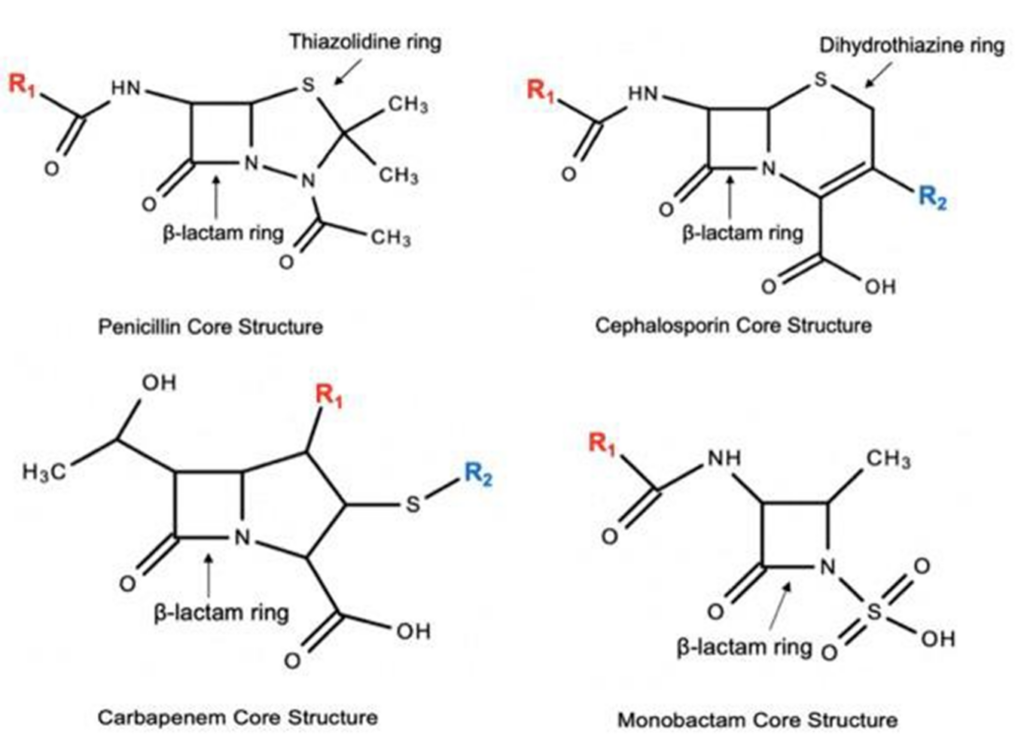
  5. Penicillins, cephalosporins, and carbapenems all share a beta-lactam core structure, thus raising the potential for cross-reactivity among these agents.

Pharmacology

  • The following drugs in each group may have cross-reactivity to each other due to similar side chains
  • Cross-reactivity between penicillins and cephalosporins is about 2%
  • Cefazolin is NOT likely to cross react with penicillin (side chains NOT similar)
  • Cross-reactivity with monobactams (i.e. aztreonam) is negligible
  • Cross-reactivity between penicillins and carbapenems is <1%
Group 1Group 2Group 3Group 4
Penicillin
Cefoxitin
Cefuroxime
Amoxicillin
Ampicillin
Cefaclor
Cephalexin
Cefadroxil
Ceftriaxone
Cefotaxime
Cefuroxime
Cefepime
Cefpodoxime Ceftaroline
Aztreonam
Ceftolazane Ceftazidime

Overview of Evidence

AuthorDesignIntervention & ComparisonOutcome
Why Cross-Reactivity?
Nagakura, 1990   Mayorga, 1995    Animal study-Studied antibodies formed when animals were immunized with protein-beta-lactam conjugates-92% of the antibodies recognized an epitope in which the side chain was the main constituent -The side chain is the most important determinant in penicillin immunogenicity
Cephalosporins
Goodman, 2001Retrospective review (n=2933)-Orthopedic patients with penicillin allergy receiving cefazolin prior to a procedureOnly 1 patient may have had an allergic reaction to cefazolinCross-reactivity rate with cefazolin was 0.33%
  Daulat, 2004  Retrospective review (n=606)-Patients with penicillin allergy receiving cephalosporins -42% 1st gen., 21% 2nd gen., and 37% 3rd or 4th gen. cephalosporinsOnly 1 patient had an allergic reaction that was documented as worsening of underlying eczema after being placed on cefazolinCross-reactivity was 0.17%
    Apter, 2006    Retrospective review (n=3920)-Patients with a prescription for penicillin followed by a prescription for a cephalosporin -Identified allergic-like events within 30 days after each prescriptionOnly 43 patients who experienced an allergic- like reaction after both penicillin and cephalosporinCross-reactivity rate was 1.1%70% of these patients just had urticariaThe risk of anaphylaxis to cephalosporins was only 0.001%
Romano, 2018Prospective review (n=252)Prospective study of 252 subjects with IgE-mediated hypersensitivity to penicillins – Serum specific IgE assays for cefaclor and skin tests for 10 cephalosporins   -Oral challenges with cefuroxime axetil, ceftriaxone, cefaclor, and cefadroxil for subjects with negative skin tests99 subjects (39.3%) had positive allergy tests for cephalosporins 95 subjects (37.7%) were positive to aminocephalosporins and/or cefamandole, which share side chains with penicillins All 244 subjects who underwent challenges with cefuroxime axetil and ceftriaxone tolerated them 7 subjects reacted to cefaclor or cefadroxil
Carbapenems
    Romano, 2006  Prospective study (n=112)-Skin tested to penicillins and then skin tested to imipenem -If skin test to imipenem was negative, then challenged with IM doseOnly 1 patient of the penicillin skin-test positive patients had a positive skin test to imipenemCross-reactivity rate was 0.9%None of the 110 patients with a negative imipenem skin test that underwent IM challenge had a reaction
  Romano, 2007  Prospective study (n=104)        -Skin tested to penicillins and then skin tested to meropenem -If skin test to imipenem was negative, then challenged with IV doseOnly 1 patient of the penicillin skin-test positive patients had a positive skin test to meropenemCross-reactivity rate was 1%All 103 patients with a negative meropenem skin test tolerated the IV challenge
  Atanaskovic- Markovic, 2008  Prospective study (n=108)-Children with penicillin allergy were skin tested to penicillin and meropenem -If skin test to meropenem was negative, then challenged with IV doseOnly 1 patient with a positive penicillin test reacted to the meropenem skin testCross-reactivity rate was 0.9%All 107 patients with a negative meropenem skin test tolerated the IV challenge
Sánchez de Vicente, 2020Prospective study (n=137)  Tolerance testing for cephalosporins and carbapenems in patients with confirmed penicillin allergy0/46 patients showed positive skin tests for imipenem. 0.79% (1/137) patients showed a positive skin test for cefuroxime.0.79% (1/137) patients showed a positive skin test for  ceftriaxone.

Conclusions

  1. True penicillin allergies are less common than reported, and anaphylaxis is uncommon.
  2. Cross-reactivity among penicillins and cephalosporins is attributed to similarity in side chains.
  3. Cephalosporin cross-reactivity with penicillins is much lower than reported in early studies partly due to contamination of study drugs with penicillin.
  4. Cross-reactivity between cephalosporins is about 2% and with carbapenems is <1%

References

  1. Apter AJ, Kinman JL, Bilker WB, et al. Is There Cross-Reactivity Between Penicillins and Cephalosporins? Am J Med. 2006;119(4):354e11-19.
  2. Atanaskovic-Markovic M, Gaeta F, Medjo B, Viola M, Nestorovic B, Romano A. Tolerability of Meropenem in Children with IgE-Mediated Hypersensitivity to Penicillins. Allergy. 2008;63:237-240.
  3. Blumenthal KG, Shenoy ES, Wolfson AR, et al. Addressing Inpatient Beta-Lactam Allergies: A Multihospital Implementation. J Allergy Clin Immunol Pract. 2017;5(3):616-625.
  4. Blumenthal KG, Huebner EM, Fu X, et al. Risk-Based Pathway for Outpatient Penicillin Allergy Evaluations. J Allergy Clin Immunol Pract. 2019;7(7):2411-2414.
  5. Campagna JD, Bond MC, Schabelman E, Hayes BD. The Use of Cephalosporins in Penicillin-Allergic Patients: A Literature Review. J Emerg Med. 2012;42(5):612-620.
  6. Chaudry SB, Veve MP, Wagner JL. Cephalosporins: A Focus on Side Chains and Beta-Lactam Cross-Reactivity. Pharmacy. 2019;7:1-16.
  7. Daulat S, Solensky R, Earl HS, Casey W, Gruchalla RS. Safety of Cephalosporin Administration to Patients with Hstories of Penicillin Allergy. J Allergy Clin Immunol Pract. 2004;113(6):1220-1222.
  8. DePestel DD, Benninger MS, Danziger L, et al. Cephalosporin Use in Treatment of Patients with Penicillin Allergies. J Am Pharm Assoc. 2008;48:530-540.
  9. Goodman EJ, Morgan MJ, Johnson PA, Nichols BA, Denk N, Gold BB. Cephalosporins can be Given to Penicillin-Allergic Patients Who Do Not Exhibit an Anaphylactic Response. J Clin Anesth. 2001;13(8):561-564.
  10. Mayorga C, Obispo T, Jimeno L, et al. Epitope Mapping of Beta-Lactam Antibiotics with the Use of Monoclonal Antibodies. Toxicology. 1995;97:225-234.
  11. Nagakura N, Souma S, Shimizu T, Yanagihara Y. Anti-Ampicillin Monoclonal Antibodies and their Cross- Reactivities to Various Beta-Lactams. Br J Hosp Med. 1990;44:252-258.
  12. Romano A, Viola M, Gueant-Rodriguez RM, Gaeta F, Pettinato R, Gueant JL. Imipenem in Patients with Immediate Hypersensitivity to Penicillins. N Engl J Med. 2006;354:2835-2837.
  13. Romano A, Viola M, Gueant-Rodriguez RM, Gaeta F, Valluzzi R, Gueant JL. Brief Communication: Tolerability of Meropenem in Patients with IgE-Mediated Hypersensitivity to Penicillins. Ann Intern Med. 2007;146:266-269.
  14. Shenoy ES, Macy E, Rowe T, Blumenthal KG. Evaluation and Management of Penicillin Allergy: A Review. JAMA. 2019;321(2):188-199.
  15. Sánchez de Vicente J, Gamboa P, García-Lirio E, Irazabal B, Jáuregui I, Martínez MD, Segurola A, Seras Y, Galán C. Tolerance to Cephalosporins and Carbapenems in Penicillin-Allergic Patients. J Investig Allergol Clin Immunol. 2020;30(1):75-76. doi: 10.18176/jiaci.0463. Epub 2019 Nov 4. PMID: 31680067.
  16. Romano A, Valluzzi RL, Caruso C, Maggioletti M, Quaratino D, Gaeta F. Cross-Reactivity and Tolerability of Cephalosporins in Patients with IgE-Mediated Hypersensitivity to Penicillins. J Allergy Clin Immunol Pract. 2018 Sep-Oct;6(5):1662-1672. doi: 10.1016/j.jaip.2018.01.020. Epub 2018 Feb 3. PMID: 29408440.

Corticosteroids in Sepsis by Marissa Marks, PharmD

Introduction

  1. Sepsis is a systemic inflammatory response (SIRS) with associated organ dysfunction as a result of an infection.
  2. Sepsis is defined as ≥2 of the criteria:
    1. Temperature >38 ºC or <36 ºC
    1. Heart rate of >90 bpm
    1. Respiratory rate of >20 breaths/minute or pCO2 of <32 mmHg
    1. WBC >12,000 cells/mL or <4000 cells/mL
  3. Initial management of sepsis includes:
    1.  Intravenous fluids (LR/NS) 30 mL/kg (based on total body weight) administered within the first 3 hours.
    1. Empiric antibiotic therapy based on the common bacteria and site of infection initiated within the first hour.
  4. Per the Surviving Sepsis guidelines, IV hydrocortisone is recommended for patients at least 4 hours after initiation of norepinephrine/epinephrine ≥0.25 mcg/kg/min to maintain a MAP of ≥65 mmHg.

Pharmacology

 Hydrocortisone Methylprednisolone Fludrocortisone
DoseIV: 50 mg Q6H or 100 mg Q8H x 5-7 daysIV (succinate): 40 to 125 mg/day (maximum of 1 to 2 mg/kg/day)PO (in addition to another glucocorticoid): 0.05 mg/day x 7 days
AdministrationIV: over ≥30 secondsIV: over several minutes or over 15 to 60 minutes as an infusionAdminister by NG tube
PK/PD-Onset of action (IV): 1 hour -T ½ elimination (IV): 2 +/- 0.3 hours-Onset of action (IV): 1 hour -T ½ elimination (IV): 0.25 +/- 0.1 hour-Onset of action (PO): 1-2 hours -T ½ elimination (PO): ~3.5 hours
Mechanism of Action-Anti-inflammatory (decreased synthesis and release of inflammatory mediators) -Immunosuppressive (decreased response to hypersensitivity reactions) -Antiproliferative: vasoconstriction and decreased permeability of WBC to the injury -Same mechanism of action as hydrocortisone with a 4-5x greater potency   – Mineralocorticoid activity > hydrocortisone or methylprednisolone
Adverse Effects-Cardiovascular: increased blood pressure -Endocrine: fluid retention, hyperglycemia, weight gain -Gastrointestinal: increased appetite -Psychiatric: altered behavior -Similar adverse effects as hydrocortisone-Higher risk of fluid retention, hypertension, and decreased electrolyte concentrations
Drug Interactions and warningsWarnings: adrenal suppression, immunosuppression (higher doses for increased duration of therapy), psychiatric changes -Drug Interactions: antacids (separate by 2 hours), live vaccinations, DDAVP (risk of hyponatremia), succinylcholine-Warnings: adrenal suppression, acute hepatitis (rare) -Drug Interactions: similar to hydrocortisone and fludrocortisone-Warnings: patients with underlying hepatic dysfunction, myasthenia gravis, systemic sclerosis, or thyroid disease -Drug Interactions: similar to hydrocortisone and methylprednisolone
CompatibilityDrug in Solution: None tested  Drug in Solution:    -Compatible: D5W- ½ NS, NS    -Incompatible: D5W, D5NS, LRN/A

Overview of Evidence

Author, yearDesign/ sample sizeIntervention & ComparisonOutcome
French Trial Annane D, 2002.  RCT (n = 300)  hydrocortisone (50-mg intravenous bolus every 6 hours) and fludrocortisone (50- micro g tablet once daily) (n = 151) or matching placebos (n = 149) for 7 days.7-day treatment with low doses of hydrocortisone and fludrocortisone significantly reduced the risk of death in patients with septic shock and relative adrenal insufficiency without increasing adverse events.
Teng-Jen Yu, 2009.RCT (n = 40)Hydrocortisone 50 mg IV Q6H or methylprednisolone 20 mg Q12H x 7 days-Higher survival rates with hydrocortisone vs methylprednisolone
VANISH Gordan, 2016RCT (n = 1400)  Vasopressin vs. norepinephrine plus hydrocortisone vs. placeboNo significant difference in mortality at 28 days, but vasopressin plus hydrocortisone was associated with faster reversal of shock and reduced need for renal replacement therapy
Gibbison B, 2017.Systematic review & meta-analysis (n = 33 clinical trials)Systemic treatment with any corticosteroids-Decreased septic shock reversal with methylprednisolone vs hydrocortisone   -Increased 28-day mortality with methylprednisolone vs dexamethasone -Decreased risk of superinfections with methylprednisolone Decreased ICU mortality and LOS with methylprednisolone
CORTICUS
Sprung, 2018
RCT, (n=499)  
Hydrocortisone 50  mg every 6 hours vs. placebo  
The study found no significant difference between the two groups in 28-day mortality, but hydrocortisone was associated with a higher rate of shock reversal and a lower rate of progression to multiple organ dysfunction syndrome.  
HYPRESS Key, 2018RCT (n = 380)  Infusion of hydrocortisone 200 mg daily for five days followed by tapering until day 11  vs placeboThe study found no significant difference between the two groups in the primary outcome of time alive and free of vasopressor support by day 7   The study also found no significant difference between the two groups in secondary outcomes such as mortality at 28 days, ICU-free days, and hospital-free days
ADRENAL Venkatesh B, 2018.RCT (n = 3800)Hydrocortisone 200 mg IV daily-No difference in 28 or 90-day mortality with hydrocortisone –Decreased time to resolution of septic shock and discharge from the ICU with hydrocortisone -Decreased number of patients received a blood transfusion with hydrocortisone -Higher number of adverse events with hydrocortisone
APROCCHHSAnnane D, 2018.RCT (n = 1280)-Hydrocortisone 50 mg IV Q6H + fludrocortisone 50 mcg PO daily in AM x 7 days -Drotrecogin alfa -Combination therapy of the three medications Decreased 90-day mortality with hydrocortisone + fludrocortisone -Decreased mortality with hydrocortisone + fludrocortisone at ICU and hospital discharge -Decreased time to discontinue vasopressor therapy and mechanical ventilation and achieve a SOFA score of <6 with hydrocortisone + fludrocortisone  

Conclusions

  • Per the Surviving Sepsis guidelines, hydrocortisone is recommended first-line for the treatment of septic shock in patients that are refractory to fluid (volume) resuscitation.
  • Hydrocortisone portrayed greater efficacy in clinical trials than methylprednisolone.
  • There are no clinical trials for the comparison of hydrocortisone monotherapy versus hydrocortisone + fludrocortisone; however, it is hypothesized that hydrocortisone provides sufficient mineralocorticoid activity as monotherapy without the increased risks of adverse effects with the addition of fludrocortisone.
    • Necessary to avoid fludrocortisone in specific patient populations (i.e. congestive heart failure, hepatic and renal disease, etc.)

References

  1. Annane D, Buisson CB, Cariou A, Martin C, Misset B, Renault A, Lehmann B, Millul V, Maxime V, Bellissant E; APROCCHSS Investigators for the TRIGGERSEP Network. Design and conduct of the activated protein C and corticosteroids for human septic shock (APROCCHSS) trial. Ann Intensive Care. 2016 Dec;6(1):43.
  2. Annane D, Renault A, Brun-Buisson C, Megarbane B, Quenot JP, Siami S, Cariou A, Forceville X, Schwebel C, Martin C, Timsit JF, Misset B, Ali Benali M, Colin G, Souweine B, Asehnoune K, Mercier E, Chimot L, Charpentier C, François B, Boulain T, Petitpas F, Constantin JM, Dhonneur G, Baudin F, Combes A, Bohé J, Loriferne JF, Amathieu R, Cook F, Slama M, Leroy O, Capellier G, Dargent A, Hissem T, Maxime V, Bellissant E; CRICS-TRIGGERSEP Network. Hydrocortisone plus Fludrocortisone for Adults with Septic Shock. N Engl J Med. 2018 Mar 1;378(9):809-818.
  3. Evans L, Rhodes A, Alhazzani W, et al. Surviving sepsis campaign: international guidelines for management of sepsis and septic shock 2021. Intensive Care Med. 2021 Nov;47(11):1181-1247.
  4. Gibbison B, López-López JA, Higgins JP, Miller T, Angelini GD, Lightman SL, Annane D. Corticosteroids in septic shock: a systematic review and network meta-analysis. Crit Care. 2017 Mar 28;21(1):78.
  5. Hotchkiss RS, Moldawer LL, Opal SM, Reinhart K, Turnbull IR, Vincent JL. Sepsis and septic shock. Nat Rev Dis Primers. 2016 Jun 30;2:16045.
  6. Hydrocortisone (2023) UpToDate. Available at: https://www.uptodate.com (Accessed: 13 August 2023).
  7. Hydrocortisone Sodium Succinate (2023) Micromedex. Available at: https://www.micromedexsolutions.com (Accessed: 13 August 2023).
  8. Venkatesh B, Finfer S, Cohen J, Rajbhandari D, Arabi Y, Bellomo R, Billot L, Correa M, Glass P, Harward M, Joyce C, Li Q, McArthur C, Perner A, Rhodes A, Thompson K, Webb S, Myburgh J; ADRENAL Trial Investigators and the Australian–New Zealand Intensive Care Society Clinical Trials Group. Adjunctive Glucocorticoid Therapy in Patients with Septic Shock. N Engl J Med. 2018 Mar 1;378(9):797-808.
  9.  Yu TJ, Liu YC, Yu CC, Tseng JC, Hua CC, Wu HP. Comparing hydrocortisone and methylprednisolone in patients with septic shock. Adv Ther. 2009 Jul;26(7):728-35.
  10. Keh D, Trips E, Marx G, Wirtz SP, Abduljawwad E, Bercker S, Bogatsch H, Briegel J, Engel C, Gerlach H, Goldmann A, Kuhn SO, Hüter L, Meier-Hellmann A, Nierhaus A, Kluge S, Lehmke J, Loeffler M, Oppert M, Resener K, Schädler D, Schuerholz T, Simon P, Weiler N, Weyland A, Reinhart K, Brunkhorst FM; SepNet–Critical Care Trials Group. Effect of Hydrocortisone on Development of Shock Among Patients With Severe Sepsis: The HYPRESS Randomized Clinical Trial. JAMA. 2016 Nov 1;316(17):1775-1785. doi: 10.1001/jama.2016.14799. PMID: 27695824.
  11. Sprung CL, Annane D, Keh D, Moreno R, Singer M, Freivogel K, Weiss YG, Benbenishty J, Kalenka A, Forst H, Laterre PF, Reinhart K, Cuthbertson BH, Payen D, Briegel J; CORTICUS Study Group. Hydrocortisone therapy for patients with septic shock. N Engl J Med. 2008 Jan 10;358(2):111-24. doi: 10.1056/NEJMoa071366. PMID: 18184957.
  12. Gordon AC, Mason AJ, Thirunavukkarasu N, Perkins GD, Cecconi M, Cepkova M, Pogson DG, Aya HD, Anjum A, Frazier GJ, Santhakumaran S, Ashby D, Brett SJ; VANISH Investigators. Effect of Early Vasopressin vs Norepinephrine on Kidney Failure in Patients With Septic Shock: The VANISH Randomized Clinical Trial. JAMA. 2016 Aug 2;316(5):509-18. doi: 10.1001/jama.2016.10485. PMID: 27483065.

Etomidate for RSI: Seizure Considerations

Introduction

  1. Rapid sequence intubation (RSI) is a process whereby an induction agent and a neuromuscular blocking agent are given in rapid succession to facilitate endotracheal intubation
  2. The selection of a specific sedative depends on multiple factors: the clinical scenario, which includes patient factors (includes cardiorespiratory and neurologic status, allergies, comorbidity) and the clinician’s experience/training and institutional factors, as well as the characteristics of the sedative
  3. Etomidate remains the most commonly used induction agent; however, it is not without its own pharmacologic considerations such the decrease in seizure threshold.

Pharmacology

Dose0.3 mg/kg IV  
AdministrationIV push
Formulation*20 mg/ 10 ml 40 mg/ 20ml 
PK/PDOnset: ~20 seconds  
Duration: 4-10 minutes  
Metabolism: Hydrolysis of the ethylester side  
Renal Excretion: 75%
Adverse EffectsInjection site pain, nausea, vomiting, myoclonus
Drug Interactions No major reactions
CompatibilityIncompatible with vitamin c and vecuronium
CommentsThere is hypothetical concerns about adrenal insufficiency with a single dose. Hemodynamically neutral
*Various formulations may appear, check you institution formulary

DrugHemodynamic EffectComments
Etomidate↔ BP, ↔ CO, ↔ HR,  ↓ cortisol , ↔ ICPProlonged inhibition of steroid synthesis in the critically ill; withdrawn from number of countries
Ketamine↑BP, ↑ HR, ↑ CO, ↔ cortisol, ↑↓ ICP↔  or ↑ CPP and ↔ ICP with standard anesthetic management
Propofol↓ BP, ↔ HR,↓ CO, ↔ cortisol, ↓ ICPHemodynamic compromise marked in elderly, ASA 3 or more or hypovolemic patients with ‘standard’ induction dose

Overview of Evidence

Author, year Design/ sample sizeIntervention & ComparisonOutcome
Perier et al,2018Retrospective N=97Etomidate vs sodium thiopental for RSI in patients with convulsive status epilepticus•       Seizure and/or status epilepticus recurred in 13 (56%) patients in the etomidate group and 11 patients (44%) in the sodium thiopental group
Gabor,2006Retrospective N=301 mg/kg of propofol or 0.2 mg/kg of etomidate for electroconvulsive therapy•       After etomidate induction, seizure durations registered either by EEG or by EMG were longer than propofol treated cases.
Zuckerbraun et al, 2006Retrospective N=101Etomidate for RSI in general population•       There was no relationship between seizures after etomidate administration and prior seizure history (p = 0.25).
Guldner,2003Retrospective N=105Etomidate for RSI in general population•       Complications included three patients who vomited within 10 minutes of etomidate administration. There were no cases of documented myoclonus, status epilepticus, or new-onset seizures.
Reddy,1993Prospective randomized study N=68Etomidate, thiopental, methohexital or propofol for anesthesia inductionSpontanous movement (myoclonic, dystonic or tremor): Etomidate 86%, thiopental 16.6%, methohexital 12.5%, propofol 5.5% EEG activity: 2 patients receiving etomidate, no generalized epileptiform activity noted
Ebrahim,  1986Case reports N=12etomidate for anesthesia induction in patient with intractable seizuresElectroencephalograms were recorded by means of subdural electrodes.  Nine of the 12 patients showed an increase in epileptiform activity.  In six of the nine patients, the activity was marked.
Krieger,1985Letter to editor N=55Etomidate for anesthesia induction or to activate seizure focus25 patients had epilptiform activity associated with etomidate administration 6/30 patients had generalized epileptiform activity noted on EEG
Grant,1983Case series N=4Etomidate infusion for sedation in ICUGeneralized and focal seizures after variable periods of etomidate o          EEGs were not evaluated at the time of suspected seizure activity. Patients were on infusion for 6-28 hours at onset of seizure activity.
Ghonrim,1977Prospective randomized study N=120Etomidate or thiopental for anesthesia induction28% etomidate vs. 0% thiopental had myoclonic movements 11% etomidate vs. 1% thiopental had tonic movements No epileptiform discharges were noted in 10 patients who had EEG monitoring

Conclusion

  • Etomidate is a commonly used induction agent for RSI in emergency settings. Etomidate has been shown to elicit myoclonus in a significant number of patients. However, whether myoclonus is associated with EEG confirmed epileptiform activities remains uncertain. To make matters worse, depending on the origin and type of seizure, it may be challenging for EEG to differentiate between non-seizure and seizure activity during myoclonic events.
  • Due to the low level of evidence, the patients with a history of seizures should have the risk versus benefit assessment to determine the best induction agent.

References

  1. Micromedex [Electronic version].Greenwood Village, CO: Truven Health Analytics. Retrieved September 6, 2021, from http://www.micromedexsolutions.com/
  2. Perier F. Seizure. 2018 Oct;61:170-176. PMID: 30176574.
  3. Zuckerbraun NS. Acad Emerg Med. 2006 Jun;13(6):602-9. PMID: 16636355.
  4. Grant IS, et al. Epileptiform seizures during prolonged etomidate sedation. Lancet 1983; 322(8348):511-2.
  5. Guldner G, et al.. Acad Emerg Med 2003; 10:134—139.
  6. Reddy RV, et al.. Anesth Analg 1993; 77:1008-11.
  7. Ebrahim ZY, et al. . Anesth Analg 1986; 65:1004-6.
  8. Krieger W, et al K. Seizures with etomidate anesthesia [letter]. Anesthesiol Analg. 1985; 64:1226–7.
  9. Ghoneim MM, Anesth Analg 1977; 56:479-85.
  10. Gabor G. Neuropsychopharmacol Hung 2007; 9(3):125-30.

Ketamine for Treatment of Acute Agitation

Introduction

  1. Ketamine is a sedative used for patients with extreme/refractory undifferentiated agitation
  2. Indications for utilizing ketamine for emergent sedation of agitated patients include
    • Patient poses and immediate threat to patient and healthcare provider safety (RASS +4)
    • Failure and/or futility of alternative non-pharmacologic de-escalation strategies
    • Absence of IV access
    • Not a candidate for intramuscular antipsychotics and/or benzodiazepines due to onset of action 

Pharmacology

PropertiesRapid acting general anesthetic producing cataleptic-like state due to antagonism of N-methyl-Daspartate (NMDA) receptors in the central nervous system.         
•      Ketamine also has significant analgesic/dissociative properties at lower doses 
Dose2-5 mg/kg IM to a max single dose of 500mg
1-2 mg/kg IV  
AdministrationIM: Inject deep IM into large muscle (glute or vastus lateralis muscle)
IV: Administer over at least 60 seconds
Formulation10 mg/mL, 50 mg/mL, 100 mg/mL 
*must use 100 mg/mL for IM administration to reduce volume   
PK/PD (for amnestic effects)Onset: 3-5 mins IM;   <1 minutes IV
Duration: 15-25 mins IM;  5-10 minutes IV
Bioavailability: 93% IM
Metabolism: Extensively through hematic N-demethylation
Elimination: Greater than 90% urine, <5% feces 
Adverse EffectsHypertension
Tachycardia
Hypersalivation
Nausea and vomiting 
Laryngospasm
Emergence phenomenon during  recovery phase
Increased muscle function  (hyperactivity, twitching, rigidity) 
Contraindications        •      Significant hypertension may be hazardous, ACS, ADHF, and unstable dysrhythmia
Warnings and ConsiderationsRapid IV administration may increase risk of respiratory depression/apnea
Verify concentration of formulation
Caution in diagnosed schizophrenia 
Hypotension in catecholamine depleted states
Pregnancy and lactation (crosses placenta)

Overview of Evidence

Author, yearDesign (sample size)Intervention & ComparisonOutcome
Lin et al., 2020Prospective, randomized, pilot (n=93)Ketamine 4 mg/kg IM or 1 mg/kg IV   Haloperidol 5-10 mg IM/IV +  lorazepam 1-2 mg IM/IVKetamine achieved greater sedation within 5 and 15 minutes (22% vs 0% at 5 mins; 66% vs 7% at 15 mins)
Mankowitz et al., 2018Systematic review (n=650)Ketamine IV or IMMean time to sedation was 7.21min and effective in 68.5% of patients 30.5% of patients required intubation, but not all secondary to ketamine administration
Cole et al., 2016Prehospital prospective, observational (n=146)  Haloperidol 10 mg IM   Ketamine 5 mg/kg IMMedian time to adequate sedation was faster with ketamine (5 min) vs haloperidol (17 min) • Intubation rates were higher with ketamine (39%) than haloperidol (4%), as well as more complications (49% vs 5%, respectively) 38% hypersalivation in ketamine group
Isbister et al., 2016Subgroup analysis from DORM II study; prospective, observational  (n=49)Ketamine as rescue treatment after Droperidol alone   Droperidol + DZP or MDZ   Midazolam aloneMedian time to sedation post-ketamine was 20 minutes (IQR 10-30) 3 patients had adverse reactions after ketamine (vomiting n=2; desaturation n=1)
Riddell  et al., 2016Prospective, observational  (n=106)Ketamine   Lorazepam, midazolam, haloperidol, or benzodiazepine + haloperidol Ketamine resulted in a greater number of patients with no agitation at 5 minutes than other medications
Scheppke  et al., 2014Retrospective chart review (n=52)Ketamine ~4mg/kg IM   *Recommended midazolam 2-2.5 mg IM or IV following ketamine for emergence reaction96% of patients obtained sedation, mean time to sedation was 2 minutes 3 patients experienced significant respiratory depression About ½ of patients received midazolam

Trials in Progress

Barbic et al., Completed March 2020, results pendingParallel, prospective, randomized, controlledKetamine 5mg/kg IM   Midazolam 5mg IM + haloperidol 5mg IMPrimary: Time to adequate sedation  Secondary: safety and tolerability, requirement of rescue medication
DZP= Diazepam; MDZ= Midazolam

Conclusions

  1. Ketamine has been shown to be effective with a quick time to sedation but is not without risks, including respiratory depression
  2. Used ketamine with caution in patients who have an underlying psychiatric disorder 
  3. Ketamine should be reserved for specific patient populations and as last line for patient/provider safety

References

  1. Ketamine. Micromedex [Electronic version].              
  2. Barbic D, et al. Trials. 2018;19(1):651. Published 2018 Nov 26.
  3. Lin M, et al. Am J Emerg Med. 2020. https://doi.org/10.1016/doi:10.1186/s13063-018-2992-x j.ajem.2020.04.013.
  4. Mankowitz WL, et al. J Emerg Med. 2018;55(5):670-81.
  5. Cole JB, et al. Clin Toxicol (Phila). 2016;54(7):556–562.
  6. Isbister GK, et al. Ann Emerg Med. 2016;67(5):581–587.
  7. Riddell J, et al. Am J Emerg Med. 2017. http://dx.doi.org/10.1016/j.ajem.2017.02.026
  8. Scheppke KA, et al. WestJEM. 2014;15(7);736-41.